We are constantly trying to improve ourselves in new thoughts, new technology and new working methods.

Views: 0 Author: Site Editor Publish Time: 2026-07-07 Origin: Site


Consumer electronics constantly demand extreme miniaturization without sacrificing functional performance. This ongoing trend creates a heavy reliance on ultra-high-energy-density materials. Engineers utilize these advanced materials to power sophisticated features inside increasingly smaller enclosures. However, device designers must balance massive magnetic strength against incredibly strict thermal limits. They also face severe corrosion risks when placing components into tight consumer devices. Furthermore, buyers navigate highly volatile rare-earth supply chains. These market fluctuations severely complicate long-term hardware procurement.
Poorly specified magnetic components will cause rapid device failure. They also frequently trigger expensive late-stage assembly delays. This guide provides a detailed decision-stage framework. You can use it for evaluating, specifying, and sourcing optimal magnetic materials. We help hardware manufacturers streamline their component supply chains and refine their design processes. You will learn how to navigate complex grade specifications and select proper environmental coatings. We also outline how to establish a highly resilient prototyping pipeline.
Grade vs. Heat: The highest-strength grade (e.g., N52) is rarely the best choice for heat-dense electronics due to low maximum operating temperatures.
Corrosion Vulnerability: Uncoated neodymium oxidizes rapidly; selecting the right plating (Ni-Cu-Ni or Epoxy) is non-negotiable for consumer device longevity.
Sourcing Realities: Securing a stable supply requires factoring in rare-earth market volatility and evaluating suppliers on RoHS/REACH compliance.
Design for Manufacturing (DFM): Specifying exact tolerances and magnetization directions early prevents late-stage production delays.
Hardware developers face relentless pressure to shrink device footprints. They must maintain or enhance user capabilities simultaneously. Transitioning to highly optimized magnetic arrays directly correlates with reduced device thickness. It also drastically improves overall user experience metrics. The integration of Neodymium Magnets in Consumer Electronic hardware shapes almost every modern interactive feature.
Engineers deploy these powerful components across several critical device subsystems:
Micro-Acoustics (Smartphones & Earbuds): High-fidelity audio requires immense power inside constrained physical spaces. Micro-speakers and dynamic drivers rely heavily on compact magnetic fields. These fields move voice coils rapidly to produce clear sound.
Haptic Feedback Motors: Precision matters in wearables and gaming controllers. Linear resonant actuators (LRAs) depend on strong magnetic flux to generate sharp, responsive vibrations. This tactile feedback defines modern interface interactions.
Magnetic Fastening & Alignment: Device ecosystems require seamless peripheral connections. MagSafe-style charging arrays ensure perfect induction coil alignment. You also see these mechanisms in laptop closures and tablet folio hinges. They deliver satisfying, secure snapping actions.
Sensors & Switches: Smart devices must interpret their physical state. Hall-effect sensors detect magnetic proximity to trigger system events. These sensors manage laptop lid detection and wearable attachment triggers automatically.
Upgrading a device's internal layout often hinges on utilizing smaller, stronger permanent magnets. A well-designed array reduces weight. It frees up crucial internal volume for larger battery cells. By understanding these application categories, procurement teams can align their sourcing strategies to support specific engineering goals.
Device engineers frequently default to the highest available strength grade. This common mistake often leads to catastrophic field loss. You must select a grade based on the actual operating environment. A basic understanding of the standard grading matrix prevents expensive design failures.
The standard nomenclature ranges from N35 to N52. The "N" number indicates the Maximum Energy Product (BHmax) measured in Mega-Gauss Oersteds (MGOe). Higher numbers denote stronger permanent magnetic fields. However, maximum strength directly introduces a severe thermal trade-off. High-strength grades generally exhibit much lower heat tolerance.
To navigate this thermal trade-off, manufacturers attach temperature suffixes to the grade number. These suffixes dictate the maximum safe operating temperature before irreversible demagnetization occurs.
Suffix | Meaning / Thermal Class | Max Operating Temperature | Common Use Case |
|---|---|---|---|
None (e.g., N52) | Standard Temperature | ~80°C (176°F) | Ambient environments, basic hinges |
M | Medium Temperature | ~100°C (212°F) | Warm internal chassis zones |
H | High Temperature | ~120°C (248°F) | Near low-draw processors |
SH | Super High Temperature | ~150°C (302°F) | Adjacent to fast-charging batteries |
UH / EH / AH | Ultra / Extreme / Advanced | 180°C to 230°C+ | High-performance LRAs, dense motors |
Consider a smartwatch housing. The internal temperature spikes rapidly during inductive fast charging. If you specify an N52 Neodymium Magnet near the battery, it will likely exceed 80°C. The component will suffer permanent thermal demagnetization. The device will lose its fastening capability. A structural evaluation framework dictates selecting an N42SH instead. You sacrifice a small percentage of initial pull force. You gain absolute thermal stability under peak operational loads.
Always base your grade selection on the highest possible temperature spike. You must measure this spike at the specific component location, not the ambient room temperature.
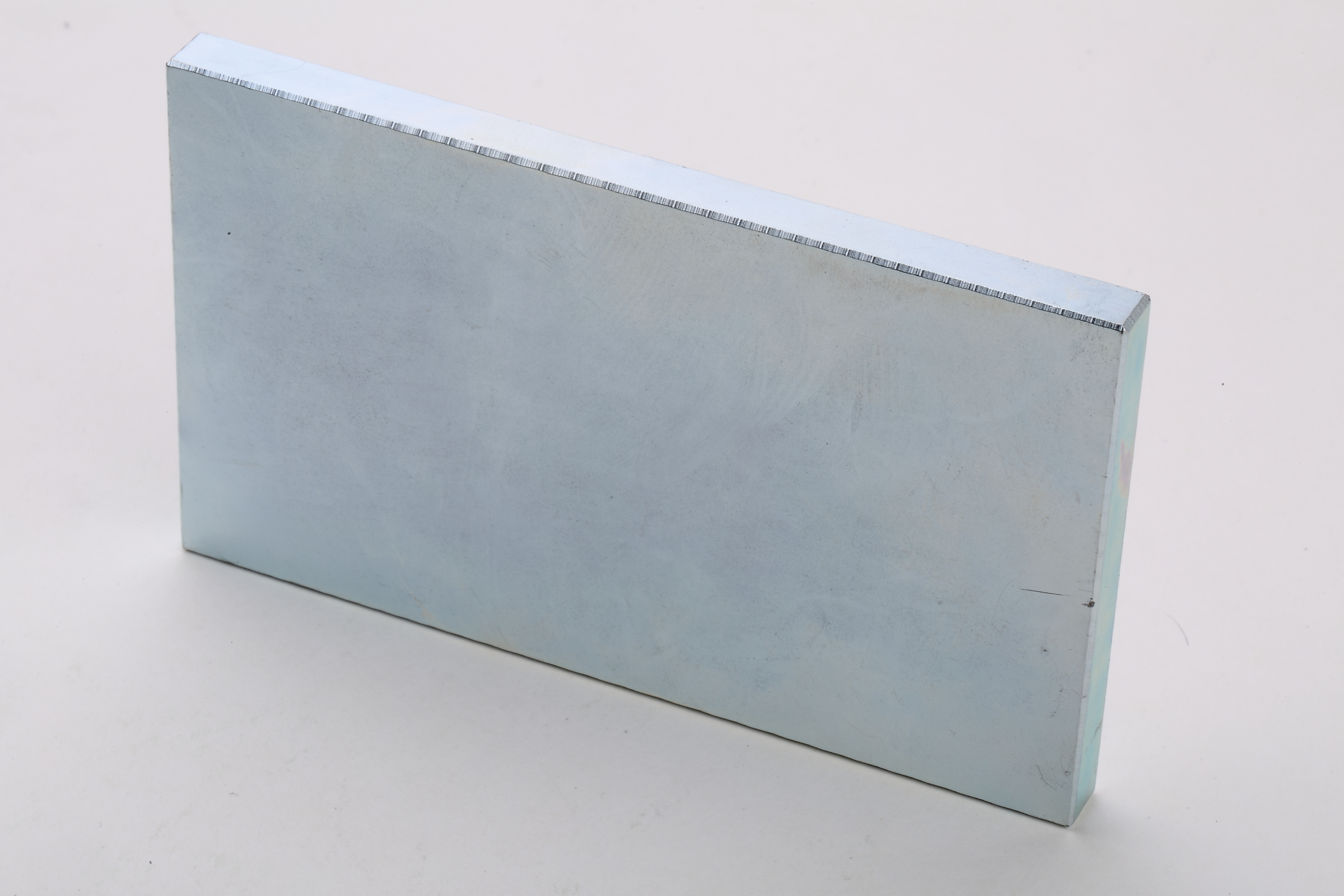
Raw neodymium iron boron (NdFeB) represents a highly reactive metallurgical compound. It remains incredibly vulnerable to environmental degradation. Raw neodymium oxidizes rapidly upon exposure to ambient air. Moisture accelerates this process exponentially. Once oxidation begins, the material flakes apart. This degradation causes complete structural and magnetic failure inside your device.
To prevent this, engineers must apply protective surface coatings. Choosing the right plating acts as a non-negotiable requirement for consumer device longevity. You have several distinct coating solution categories available.
Nickel-Copper-Nickel (Ni-Cu-Ni) serves as the predominant industry standard for consumer technology. It provides a highly durable, cost-effective barrier against daily humidity. The tri-layer structure ensures tight dimensional tolerances. However, Ni-Cu-Ni remains electrically conductive. You must account for potential short-circuit risks if placed against exposed PCBs.
Epoxy coatings offer superior moisture resistance. Hardware teams often prefer epoxy for marine equipment and outdoor wearables. The black resin shell completely seals the reactive core. Epoxy is non-conductive, which simplifies internal electrical isolation. However, it chips more easily under sharp mechanical impact.
Zinc or Parylene coatings fulfill specific niche applications. Zinc provides a high-friction surface suited for mechanical clamping designs. Parylene delivers extreme biocompatibility and ultra-thin profiles. Engineers specify Parylene for advanced medical wearables and internal body sensors.
Effective risk mitigation requires matching device Ingress Protection (IP) ratings to coating specifications. A smartwatch rated IP68 demands rigorous salt-spray test hours from its internal components. If the device undergoes a 48-hour salt-spray test, the internal plating must survive identical conditions. Always mandate explicit salt-spray survival metrics when drafting your component requirement sheets.
Purchasing rare-earth materials involves navigating complex geopolitical realities. Geographic concentration heavily defines rare-earth mining and processing sectors. A handful of regions control the vast majority of raw material refinement. This centralization directly impacts global pricing stability. Hardware manufacturers must acknowledge these market realities when forecasting production budgets.
Procurement teams face strict compliance and safety mandates. You must verify RoHS (Restriction of Hazardous Substances) compliance for every batch. REACH compliance is equally vital for legally selling consumer goods within European markets. Suppliers failing to provide up-to-date compliance certificates expose your entire product line to catastrophic legal blockages. You cannot afford customs seizures due to unverified heavy metal trace elements.
Modern consumers and investors scrutinize the Environmental, Social, and Governance (ESG) lens heavily. Evaluating suppliers based solely on piece-price no longer suffices. You should demand raw material traceability. Leading suppliers now invest in recycling initiatives. They reclaim NdFeB from end-of-life electronics. Look for partners utilizing "green chemistry" refining practices. These methods dramatically reduce toxic wastewater during the extraction phase.
Scalability checks protect your final assembly pipeline. You should avoid single-sourcing highly complex custom shapes whenever possible. Standardizing component dimensions insulates your Bill of Materials (BOM) from abrupt supply shocks. If a geopolitical event disrupts your primary vendor, standard shapes allow secondary suppliers to step in immediately. Custom tooling creates dangerous single points of failure. Engineer your enclosures to accept widely produced geometries early in the design cycle.
Transitioning from a functional engineering prototype to mass production requires rigorous documentation. Handshake agreements and vague specifications destroy production yields. Your shortlisting logic must evolve. You move from finding the cheapest prototype to identifying the most consistent high-volume partner.
A flawless transition relies on mastering the critical spec sheet elements. Vague purchase orders guarantee manufacturing disputes. You must define exact physical and magnetic expectations.
Precise Dimensions and DFM Tolerances: State your exact measurements in millimeters. Apply realistic Design for Manufacturing (DFM) tolerances. A standard tolerance sits between ±0.05mm and ±0.1mm. Tighter tolerances exponentially increase manufacturing costs and rejection rates.
Magnetization Direction: Define the magnetic orientation clearly. Specify if the component requires axial, diametrical, or multipole magnetization. An axial disc performs completely differently than a diametrical disc.
Pull-Force vs. Gauss Measurements: Never rely solely on generic pull-force estimates. Define your actual surface gauss requirements. Specify the exact air gap distance for testing. This provides a verifiable metric for quality control teams upon receiving a shipment.
Supplier vetting requires active data verification. Request comprehensive demagnetization curves for the specific thermal grade you ordered. Demand Material Safety Data Sheets (MSDS). Ask for sample batch consistency reports from previous production runs. These documents prove the supplier possesses mature quality control frameworks.
Before committing to high-volume procurement, initiate a controlled pilot run. We recommend ordering exactly 1,000 units. Use this pilot batch to test your automated assembly lines. Assembly robots often struggle handling strong permanent fields. You must observe how the components interact inside your automated pick-and-place machinery. Resolving handling issues during a pilot run prevents massive factory downtime later.
Integrating advanced magnetic materials into consumer electronics requires a careful, balanced approach. You must balance raw attractive power against severe thermal limitations and environmental vulnerabilities. Protective coatings ensure device longevity, while smart procurement practices safeguard your production line.
Your main objective is avoiding over-specification. Do not arbitrarily demand the strongest available grade. Engineer specifically for the actual operating environment of your device. Match the thermal ratings and coating thickness to real-world usage scenarios. This targeted approach prevents premature hardware failures and reduces unnecessary material costs.
Engage directly with certified magnetic engineering teams early in your CAD phase. They can optimize your design for manufacturability before tooling begins. Finalize your exact tolerances, request a detailed material quote, and launch a pilot run to secure your supply chain today.
A: Under normal consumer electronic operating conditions, they maintain incredible stability. If kept well below their Curie temperature and maximum operating limits, they lose less than 1% of their flux density over a 10-year period. Heat and physical damage are the primary causes of degradation, not time.
A: Yes. Unshielded magnetic fields can easily disrupt sensitive compass sensors (magnetometers) and unshielded medical pacemakers. Engineers utilize proper magnetic circuit design, ferrous shielding, and specialized Halbach arrays. These techniques successfully contain stray fields and prevent internal device interference.
A: While standard discs and blocks ship rapidly from existing stock, custom shapes require extensive preparation. Creating bespoke tooling, cutting molds, and applying custom plating for specific device enclosures typically requires 4 to 8 weeks for initial prototypes.
A: The Nickel-Copper-Nickel triple layer provides an optimal balance of cost-efficiency and durability. It ensures incredibly tight dimensional tolerances essential for miniaturized electronics. It also offers excellent protection against ambient humidity and minor impacts found in everyday consumer device usage.


