We are constantly trying to improve ourselves in new thoughts, new technology and new working methods.

Views: 0 Author: Site Editor Publish Time: 2026-08-21 Origin: Site


A powerful fishing magnet can turn a small piece of steel into a fast-moving object and make a heavy find difficult to control. Safe use begins before the first cast: inspect the rope and attachment hardware, keep the magnet away from vulnerable devices and fingers, choose a site with stable footing and lawful access, and decide how you will handle sharp or suspicious finds. Magnetic force is useful for recovery, but it does not replace judgement about load paths, water conditions, people nearby, or unknown objects below the surface.
Keep fingers clear whenever the fishing magnet is near steel or another strong magnet.
Inspect rope, knot, eye bolt, and threaded connections before every session.
Wear gloves and use a container for sharp, dirty, or contaminated metal finds.
Never wrap a tensioned rope around your body or use uncontrolled force to free a snag.
Stop and contact the appropriate authority if a find could be hazardous, suspicious, or evidence.
Strong magnets can close a gap quickly. The danger is not only the fishing magnet striking a steel object; small parts can jump from a surprising distance and trap skin between metal surfaces. Keep hands off the magnetic face during setup. Place the magnet on a non-ferrous, stable surface where it cannot roll into tools, railings, or vehicle panels. Do not let children handle a powerful recovery magnet without direct, competent supervision.
Keep the magnet separated from phones, computers, magnetic cards, storage media, watches, and medical equipment whose operation could be affected by magnets. People who rely on implanted or wearable medical devices should follow their device provider’s safety guidance and keep appropriate distance from powerful magnets.
The magnet is only one part of the load path. Examine the eye bolt, lifting ring, threaded socket, rope, knot, swivel, and connector before use. Remove rope from service if it has cuts, deep abrasion, melting, flattened braid, or damage near the attachment. Confirm that threaded hardware is clean and engaged as intended; dirt can create a false sense of tightness.
Component or situation | Essential precaution |
Magnet and steel surface | Keep fingers out of the closing gap |
Rope and connector | Inspect for wear before loading |
Heavy or unknown find | Pull slowly and keep people away from the path |
Stuck magnet | Change angle; never shock-load the rope |
Sharp debris | Wear gloves and use a rigid container |
Suspicious object | Do not move or transport it; seek official help |
The Shine fishing-magnet range includes recovery designs with different eye and sleeve arrangements. Buyers should match the attachment system and rope to the intended recovery direction and anticipated load, rather than treating an advertised magnetic rating as a complete safety specification.
Stable footing is a basic control. Avoid slippery banks, fast current, tide changes, crowded paths, overhead hazards, and locations where a hard pull could pull someone toward the water. Check access rules and avoid restricted sites, rail infrastructure, active docks, private property, and utility areas. Never cast near people swimming, diving, or operating small boats.
Consider where the rope will travel on the return. A line dragged across a sharp quay edge or under a railing can be damaged without being obvious. Work a manageable area and maintain enough space to change pull angles if the fishing magnet attaches to an obstacle.
Recovered metal can have sharp edges, contamination, fishing line, glass, batteries, chemicals, or unstable parts. Wear gloves, do not reach blindly into a bucket, and separate ordinary scrap from items that deserve more caution. Use a container with a stable base. Do not put recovered metal loose in a vehicle where it can move or attach to structural steel.
Some discoveries should be left untouched. If an item resembles a weapon, ammunition, explosive device, chemical container, or potential evidence, move away, keep others clear, and contact the relevant emergency service or authority. Do not clean it, carry it home, or post a close-up while still at the location. Local laws and response procedures vary, so no article can replace official instruction.
When the magnet sticks, stop pulling hard. Check the rope path, keep people clear, and change the angle of pull gradually. A magnetic hold often releases more readily when it is peeled sideways than when it is pulled straight away. If the rope is tangled, add controlled slack and reposition rather than turning your body, a railing, or a vehicle into an improvised anchor.
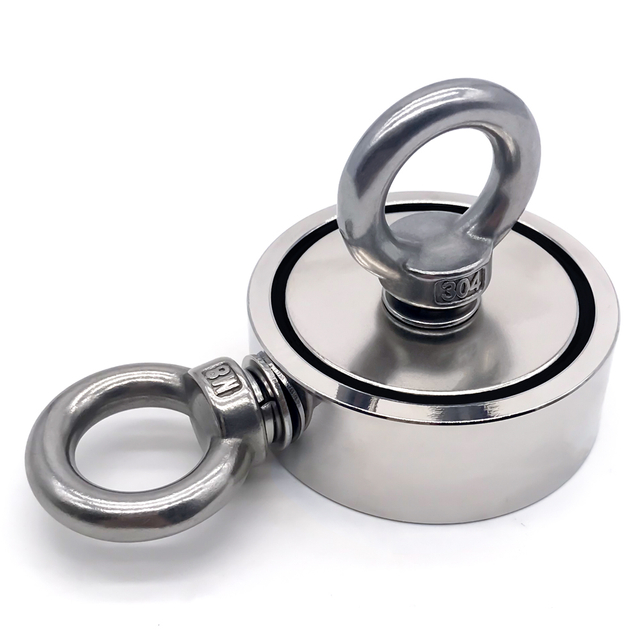
The double-sided recovery magnet is intended for magnetic retrieval applications, but any strong magnet can attach to larger steel than a user can safely lift. Leave equipment in place if recovery would require unsafe force, risk property damage, or disturb a potentially hazardous object.
After use, remove sharp fragments, rinse and dry the magnet, inspect its housing and hardware, and store it in a dry protected case. Keep it from loose tools, electronic equipment, and areas where it could attract metal unexpectedly. Dry the rope separately if it is wet. Transport the magnet so it cannot slide across the vehicle and attach to a steel surface where removal becomes difficult.
Ningbo Shine Magnetic Technology Co., Ltd. supplies fishing magnets for retrieval applications. A safe purchase decision considers more than magnetic strength: the housing, attachment design, rope interface, recovery method, likely target, and user’s ability to handle and store the complete assembly all matter.
Fishing magnet safety comes from controlling magnetic force, rope tension, site conditions, and unknown finds. Protect hands from pinch points, inspect every load-bearing connection, wear gloves, and never use uncontrolled force on a stuck line. Treat suspicious objects as a reason to stop rather than a challenge to solve. With a planned site, a maintained recovery system, and deliberate handling, powerful magnetic retrieval can remain a controlled activity rather than an avoidable risk.
They can cause pinch injuries, pull sharp steel unexpectedly, and create rope-tension hazards. They are safest when handled with distance, planning, and appropriate protective equipment.
Use durable gloves suited to handling wet, sharp metal. Gloves reduce cuts but do not make it safe to place fingers in a magnetic pinch point.
Powerful magnets can affect some electronic devices, magnetic cards, and storage media. Keep the magnet well away from them.
Do not handle, clean, transport, or publicly display it. Keep people away and contact the relevant local authority or emergency service.
Not automatically. Consider the object’s unknown weight, snagging, footing, rope condition, and release path. Stop if the lift cannot be controlled safely.


