We are constantly trying to improve ourselves in new thoughts, new technology and new working methods.

Views: 0 Author: Site Editor Publish Time: 2026-06-28 Origin: Site


Modern manufacturing and product design constantly push toward extreme miniaturization. You need materials delivering maximum holding force in minimal space. Enter the Neodymium Magnet, specifically the NdFeB alloy. It stands as the undisputed industry standard for rare-earth magnetic strength. Today, these powerful components drive innovation across electronics, automotive motors, and sophisticated medical devices.
For engineers, product designers, and procurement managers evaluating magnetic materials, understanding the "why" behind this strength remains critical. Knowing how a neodymium magnet works helps you select the exact right grade for your specific application. It allows you to manage implementation risks effectively. Most importantly, it prevents costly over-engineering. This guide breaks down the science of their incredible power, the grading systems you must navigate, and the practical sourcing strategies needed to deploy them safely and efficiently.
Unmatched Energy Density: Neodymium magnets utilize a highly crystalline Nd2Fe14B structure, providing the highest Maximum Energy Product (BHmax) of any commercially available permanent magnet.
Grade Dictates Application: Strength is not uniform; grades (e.g., N35 to N52) and temperature ratings dictate exact performance limits and cost considerations.
Environmental Vulnerabilities: Extreme strength comes with structural tradeoffs—specifically low resistance to corrosion and high-temperature demagnetization—requiring specific plating and grade modifications.
ROI and Sourcing: Selecting the right neodymium magnet requires balancing pull-force requirements against operating environment, safety compliance, and supply chain scalability.
To understand why these components deliver such massive power, we must look at their core composition. A standard Neodymium Magnet consists primarily of an alloy represented by the chemical formula Nd2Fe14B. This blends Neodymium (a rare-earth element), Iron, and Boron. Each element plays a highly specific role. Neodymium generates the exceptionally strong magnetic field. Iron contributes high magnetization capabilities. Boron acts as a critical stabilizing agent binding the atomic structure together. When combined, they form a crystalline structure boasting unprecedented energy density.
This specific crystal lattice creates a phenomenon called magnetic anisotropy. In simple terms, the atomic structure strongly prefers to align its magnetic moment along one specific crystallographic axis. It strongly resists magnetic movement in any other direction. This unique property prevents the internal magnetic field from easily reversing direction when exposed to opposing fields. Engineers refer to this resistance as high coercivity. A material possessing high coercivity remains magnetized even in harsh, challenging electrical environments.
We can easily translate this material science directly into practical engineering value. The combination of high Remanence (Br) and high Coercivity (Hc) yields dramatic results. High remanence means the magnetic field is intensely strong. High coercivity means it is extremely stable. Because of these traits, manufacturers can drastically reduce the physical size and weight of their final assemblies. You can design highly efficient stepper motors, ultra-sensitive hall-effect sensors, and powerful industrial fixtures in fractions of their previous sizes. You achieve all this without sacrificing a single ounce of operational performance.
Selecting the correct magnet requires navigating a standardized grading system. Manufacturers universally grade these components using an "N" followed by a number, such as N35 or N52. The "N" stands for Neodymium, and the number represents the Maximum Energy Product (BHmax) measured in Mega-Gauss Oersteds (MGOe). Higher numbers indicate a higher energy density. An N52 grade packs significantly more magnetic strength into the exact same volume than an N35 grade. However, higher grades also command higher raw material premiums.
When evaluating these materials for a project, engineers primarily look at two key metrics:
Pull Force: This metric calculates how strength translates to holding capability. Labs test pull force under ideal conditions using a thick, perfectly flat steel plate pulled perpendicular to the magnet. Real-world applications almost always yield lower results. Uneven surfaces, thin sheet metal, air gaps, and lateral sliding forces drastically reduce the actual holding power. You must account for these real-world losses during the design phase.
Gauss or Tesla: This measures the actual surface field and magnetic flux density. Motor and sensor designers rely heavily on this metric. It dictates how the magnetic field interacts with surrounding copper coils or microchips at specific distances. A higher Gauss reading typically translates to better sensor activation or greater motor torque.
Buyers often make a common mistake during the decision stage. They automatically default to specifying an N52 grade, assuming stronger is always better. We strongly advise against this approach. Over-specifying grade unnecessarily inflates project budgets. Instead, frame your purchasing decision around achieving "adequate holding force plus a safety margin." If an N42 grade easily meets your required pull force while accounting for minor air gaps, upgrading to N52 wastes resources. Match the grade precisely to your calculated operational needs.
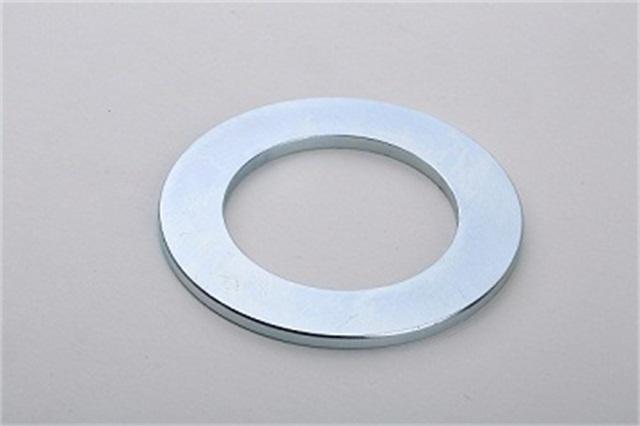
Despite their incredible strength, a neodymium magnet is not always the correct choice for every project. Sometimes, extreme environmental factors or simple budget constraints render them unsuitable. Product designers must clearly understand the problem framing. When does a rare-earth alloy become a liability rather than an asset? Identifying the operational environment helps you rule out inappropriate materials early in the prototyping phase.
To simplify material selection, consider the following decision framework. We compare the three most common permanent magnet families.
Material Type | Primary Advantage | Peak Strength (BHmax) | Heat Tolerance | Relative Cost |
|---|---|---|---|---|
Neodymium (NdFeB) | Extreme miniaturization, max pull force | Highest (up to 52 MGOe) | Low to Moderate (Up to 200°C with custom grades) | Moderate to High |
Samarium Cobalt (SmCo) | High heat stability, high corrosion resistance | High (up to 32 MGOe) | Excellent (Up to 300°C - 350°C) | Very High |
Ceramic / Ferrite | Cost-effective, highly corrosion resistant | Low (up to 4 MGOe) | Good (Up to 250°C) | Very Low |
Use this comparison matrix to guide your shortlisting logic. Match the magnetic material directly to the specific lifecycle and operating environment of your end product. If you need ultimate strength at room temperature in a compact space, NdFeB remains undisputed. If your application involves high-heat environments like aerospace turbines or highly corrosive chemical processing, consider Samarium Cobalt (SmCo). SmCo provides an excellent alternative where NdFeB might fail, despite having slightly lower peak strength and higher raw costs. Conversely, if space is unrestricted and strength requirements remain low—such as in basic consumer refrigerator magnets—Ceramic/Ferrite serves as the ideal budget alternative.
Extreme magnetic strength introduces specific structural and environmental tradeoffs. Engineering teams must actively mitigate these risks during design and assembly. Overlooking these vulnerabilities routinely leads to product failure in the field.
Heat poses the greatest threat to a standard Neodymium Magnet. Every magnetic material possesses a Curie Point—the temperature at which it loses all magnetic properties permanently. More importantly, they have maximum operating temperatures. Standard NdFeB starts losing magnetism around 80°C (176°F). To combat this, manufacturers alter the alloy formulation to increase thermal stability. They denote these specialized grades using temperature suffixes added to the base grade.
Suffix | Meaning | Max Operating Temp (°C) |
|---|---|---|
(None) | Standard | 80°C |
M | Medium | 100°C |
H | High | 120°C |
SH | Super High | 150°C |
UH / EH | Ultra / Extreme High | 180°C / 200°C |
Corrosion presents another significant challenge. The high iron content makes bare neodymium highly vulnerable to rapid oxidation. Without protection, it quickly rusts, flakes apart, and loses structural integrity. We mitigate this through mandatory surface plating. The industry standard utilizes a triple-layer Nickel-Copper-Nickel (Ni-Cu-Ni) coating. However, you must specify specialized coatings based on the environment. Marine applications frequently use thick epoxy coatings to block saltwater intrusion. Medical devices often utilize biocompatible zinc or gold plating.
Furthermore, do not underestimate mechanical fragility. The crystalline structure makes NdFeB inherently brittle. It behaves more like ceramic than solid steel. Because their magnetic pull is so strong, two loose magnets can unexpectedly snap together across a workbench. The resulting impact force easily causes them to shatter, sending sharp metallic shrapnel into the air. Frame this reality as both a crucial design tolerance issue and an assembly-line safety hazard. Operators handling large sizes require strict safety protocols. Finally, ensure your specified materials meet basic compliance considerations. International supply chains strictly demand REACH and RoHS compliance to avoid restricted or hazardous substances.
Purchasing rare-earth components requires far more detail than buying standard hardware. Vague requests lead to inconsistent performance and project delays. You must define clear success criteria before approaching a supplier. A comprehensive specification sheet eliminates ambiguity and ensures repeatable quality.
When you bring a project to a supplier, always clearly define the following criteria:
Precise Dimensions and Tolerances: Specify acceptable variance (e.g., +/- 0.05mm). Tight tolerances increase machining time and costs.
Maximum Operating Temperature: State the exact thermal peaks the assembly will endure to ensure the correct suffix (M, H, SH) is applied.
Plating Requirements: Call out the exact coating material and required thickness based on your environmental testing.
Polarization Direction: Specify whether the component is magnetized through its thickness, length, or diameter. Getting this wrong renders the part completely useless.
You must also evaluate whether to pursue custom or off-the-shelf solutions. Standard shapes—such as basic blocks, discs, and rings—require no specialized tooling. They offer faster lead times and lower initial costs, making them perfect for rapid prototyping. However, if your motor assembly requires complex arc segments or unique mounting holes, investing in custom tooling becomes necessary. Weigh the upfront tooling cost against long-term assembly efficiency.
Finally, focus on rigorous supplier vetting. The rare-earth market fluctuates wildly, and inconsistent quality plagues lower-tier manufacturers. Look for specific trustworthiness markers when selecting a partner. Reliable suppliers provide full traceability of rare-earth raw materials. They routinely supply documented testing reports proving the BHmax and physical pull force match your specifications. Furthermore, prioritize suppliers holding current ISO certifications. This guarantees they maintain standardized quality control processes from powder pressing to final plating.
The pure physical strength of a neodymium magnet remains virtually unmatched in the realm of permanent magnetics. They empower product teams to design smaller, lighter, and more highly efficient assemblies across countless industries. However, successfully unlocking this immense value requires extensive technical precision. Simply buying the strongest grade available usually leads to wasted budgets and unforeseen failures. You must carefully specify the exact grade, maximum temperature rating, and protective coating demanded by your product's operating environment.
Move your evaluation process from theoretical research to practical testing. Review the comparison matrices and material properties discussed above. Next, request detailed technical datasheets from reputable suppliers. Order off-the-shelf sample kits to test real-world pull forces within your prototypes. If your application involves complex thermal or environmental challenges, consult directly with a magnetic engineering specialist. Taking these actionable steps guarantees you finalize your part specifications with confidence and secure the exact performance your design requires.
A: The strongest commercially available grades are N52 and N55. These offer the highest Maximum Energy Product (BHmax). However, N55 is extremely brittle and sensitive to temperature changes. Most industrial applications safely max out at N52. Always assess if you truly need maximum strength before specifying these premium grades.
A: Under normal, room-temperature operating conditions, they are incredibly stable. A standard neodymium magnet will lose less than 1% of its total flux density over 10 years. Unless exposed to extreme heat, severe physical impacts, or opposing magnetic fields, they provide virtually permanent magnetic performance throughout a product's lifecycle.
A: No. We strongly warn against machining them yourself. The material is highly brittle and will easily shatter under standard drill bits. Machining generates intense friction heat, which quickly destroys the internal magnetic field. Furthermore, the resulting dust is highly flammable and toxic. Always purchase pre-machined custom shapes directly from manufacturers.
A: The core alloy contains a massive amount of iron. Without a protective barrier, the iron reacts rapidly with ambient moisture and oxygen. This exposure causes aggressive oxidation (rust). The rust degrades the structural integrity, causing the surface to flake apart and the magnetic strength to completely fail. Standard Ni-Cu-Ni plating prevents this destruction.


