We are constantly trying to improve ourselves in new thoughts, new technology and new working methods.

Views: 0 Author: Site Editor Publish Time: 2026-06-23 Origin: Site


Engineers face a constant battle against gravity and the elements when securing equipment in harsh environments. Standard magnetic assemblies often fail here due to corrosion, surface damage, or rapid lateral slippage. Selecting the wrong component can lead to catastrophic equipment drops. This reality forces a critical engineering trade-off. We must balance the raw holding power of neodymium (NdFeB) against the protective, friction-enhancing, and weather-resistant properties of vulcanized rubber coatings. Bare magnets simply lack the grip and environmental resilience required for high-stakes outdoor applications.
This guide provides technical buyers and design engineers with a rigorous framework for evaluating these specialized assemblies. You will learn how to size and specify the right components for demanding outdoor and heavy industrial use cases. We cover everything from analyzing actual force curves to implementing strict vendor qualification processes. Armed with this knowledge, you can confidently integrate the right magnetic solutions into your next project.
Friction vs. Raw Pull: The rubber coating slightly increases the magnetic air gap (reducing perpendicular pull force) but exponentially increases lateral friction (shear force), preventing downward sliding.
Environmental Resilience: Fully sealed rubber designs render NdFeB magnets waterproof, highly corrosion-resistant, and spark-free for hazardous areas.
Specification Imperatives: Procurement must evaluate thermal limits (both magnet grade and rubber compound), thread/mounting structural integrity, and chemical exposure risks.
Standard bare magnets pose several functional risks in dynamic industrial settings. You cannot mount a bare steel magnet directly onto a painted automotive panel without causing severe scratches. Furthermore, bare magnets rust quickly in high-moisture environments. Their smooth metal surfaces also feature low friction coefficients. This causes heavy assemblies to slip rapidly down vertical planes under their own weight. To solve these issues, engineers turn to a specialized subset of Pot Magnets wrapped in durable elastomers.
Understanding the performance of these assemblies requires analyzing two competing physical principles. First, we must look at the "air gap" effect. The rubber coating introduces a fractional, non-magnetic distance between the inner neodymium magnet and the mating steel surface. Magnetic pull strength decreases exponentially as this air gap increases. Therefore, the absolute perpendicular holding force of a coated magnet is always lower than its bare counterpart.
However, the friction coefficient advantage easily offsets this loss in most applications. The rubber elastomer actively grips the mating surface. This drastically improves the shear weight capacity compared to bare steel-on-steel contact. When mounting loads on vertical walls, shear force matters far more than perpendicular pull force. The high-friction surface prevents the assembly from sliding downward.
Industrial safety regulations dictate strict material choices in hazardous locations. Facilities handling oil, gas, and volatile chemicals operate under strict explosion-proof mandates. A bare metal magnet striking a solid steel beam can generate an impact spark. The rubber barrier eliminates this metal-on-metal contact. This effectively renders the magnetic assembly spark-free. This characteristic is a critical compliance requirement for ATEX-certified environments and chemical processing facilities.
Comparison: Bare Steel vs. Rubber Coated Assemblies | ||
Attribute | Bare Steel Assemblies | Rubber Coated Assemblies |
|---|---|---|
Perpendicular Pull Force | Maximum (Zero air gap) | Reduced (Due to elastomer thickness) |
Vertical Shear Friction | Very Low (Sliding risk) | Exceptionally High (Strong grip) |
Surface Protection | Poor (Scratches paint) | Excellent (Soft contact) |
Spark Risk | High (Metal-on-metal impact) | None (Spark-free compliance) |
Specifying magnets for critical infrastructure requires concrete evidence. Engineers must look past marketing claims and demand verifiable performance data. You must evaluate these components across several technical dimensions before shortlisting them for production.
Manufacturers often advertise theoretical maximum pull forces. These numbers can be highly misleading. You must differentiate between the stated Pull Force (perpendicular to the surface) and the Shear Force (parallel or sliding force). In vertical applications, shear force dictates performance. Engineers should demand actual pull-test curve data rather than relying on theoretical maximums. A proper force curve chart reveals how the magnet behaves under incremental load changes and varying surface thicknesses.
Steel Thickness (mm) | Perpendicular Pull (kg) | Vertical Shear (kg) |
|---|---|---|
1.0 | 12.5 | 4.2 |
3.0 | 28.0 | 9.5 |
10.0+ | 42.0 | 14.0 |
Temperature fluctuations degrade magnetic performance and compromise elastomer integrity. Standard NdFeB magnets begin losing holding power permanently above 80°C. Furthermore, standard rubber formulations may melt, warp, or crack under extreme heat. You must evaluate the thermal degradation limits of both the magnet grade and the rubber compound used. High-temperature environments require specialized high-temp rubber formulations or silicone wrappers.
Environmental exposure extends beyond just temperature. You must assess UV exposure and chemical resistance. Prolonged sunlight degrades standard rubbers. Industrial environments expose assemblies to cutting oils, harsh solvents, and saltwater. Specify materials like Santoprene or nitrile blends if chemical exposure is likely.
Manufacturing variance plays a massive role in large procurement batches. Rubber vulcanization is not as precise as CNC metal machining. Variances in rubber thickness directly alter the magnetic air gap. A coating that is just 0.5mm too thick can reduce holding force by 15%. You must address these dimensional tolerances with your vendor. Strict quality control ensures predictable holding forces across thousands of units.
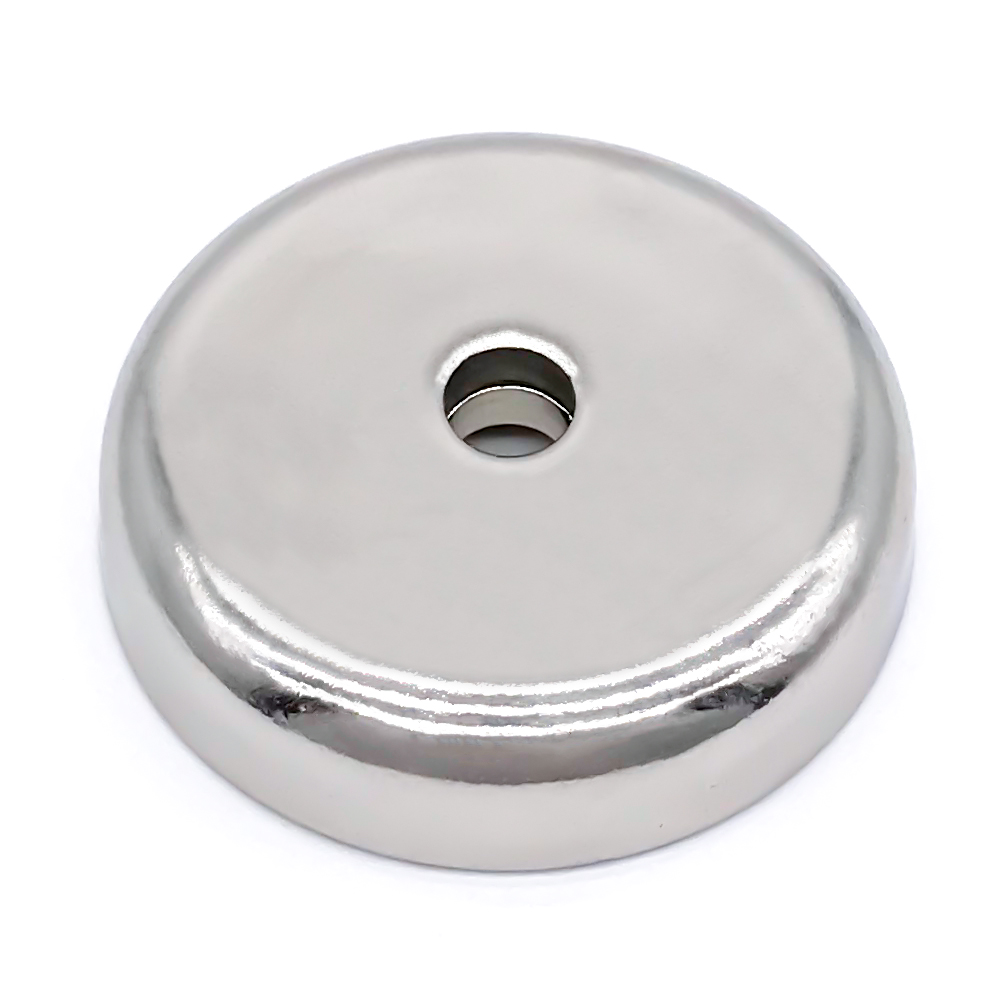
Mechanical integration dictates how well the magnet serves your application. You must match the form factor to your exact structural requirement. Using the wrong mounting style often leads to mechanical tear-out under heavy loads.
Threaded Stem / Stud Configurations: These units feature an external threaded bolt protruding from the base. They are best for attaching heavy fixtures, emergency lighting, or equipment brackets directly to the magnet base. When specifying these, focus closely on thread shear strength. The bolt must withstand lateral jolts without snapping.
Internal Thread / Boss Formats: These designs feature a recessed threaded hole. They are ideal for flush mounting applications. They accept external bolts from your equipment frame. Evaluating torque limits is crucial here. Over-tightening the external bolt can pull the internal steel core right through the rubber, tearing the internal assembly apart.
Countersunk / Through-Hole Designs: These allow you to secure the magnet to a surface using flathead screws. They are common in custom jig creation. You must discuss the risk of over-torquing with your installation team. Excessive screw pressure can crack the brittle internal neodymium magnet. It can also compress and compromise the protective rubber seal, inviting moisture inside.
Selecting Rubber Coated Pot Magnets unlocks possibilities across multiple rugged industries. These components solve distinct operational challenges where standard hardware fails.
Fleet operators frequently mount temporary equipment on vehicle exteriors. These include illuminated taxi signage, GPS tracking devices, and wide-load safety lighting. Using traditional hardware requires drilling into the chassis. This damages the vehicle and lowers resale value. Bare magnets eliminate drilling but severely scratch the clear coat paint during vehicle motion. Elastomer-coated assemblies allow for secure, high-speed temporary mounting. They grip the curved body panels firmly without risking paint damage.
Saltwater destroys exposed neodymium rapidly. Oxidation causes the magnet to swell, crack, and lose all structural integrity. Offshore oil rigs and commercial marine vessels require completely sealed mounting solutions. Utilizing the waterproof encapsulation prevents NdFeB oxidation in high-salinity environments. Operators use them to secure temporary sensor arrays, safety netting, and underwater inspection cameras.
Construction sites are highly dynamic and physically punishing. Workers constantly reposition temporary lighting, power cables, and safety barriers. Traditional clamps take too long to secure and adjust. However, heavy machinery vibrations cause standard bare magnets to slip down steel scaffolding. Coated assemblies solve this. They hold thick cables and tarps firmly on steel I-beams. The high-friction surface absorbs ambient vibration, ensuring the temporary rigging stays exactly where placed.
Trusting a new supplier requires transparent risk assessment. Even the best designs fail if manufacturing quality drops. Procurement teams must conduct thorough due diligence to avoid costly operational failures.
Rubber Delamination: Repeated heavy impacts or improper shear loading can tear the rubber away from the internal steel cup. Once the elastomer delaminates, the friction advantage vanishes.
Magnet Degradation: If sharp debris punctures the rubber seal, moisture will enter the assembly. The internal NdFeB material will rapidly oxidize and crumble, causing sudden load drops.
Thermal Softening: Using standard elastomers near engine blocks or industrial ovens will cause the rubber to melt. This compromises both grip and surface protection.
Protect your project by asking suppliers the right technical questions. Use this checklist during the vetting process:
Do they provide certified pull-test data specific to the rubber-coated SKUs across different steel thicknesses?
Can they confirm the exact grade of NdFeB (e.g., N35, N42, N52) used inside the assembly?
What is the shore hardness of the vulcanized rubber, and how does it perform in sub-zero or high-heat conditions?
What specific adhesives do they use to bond the rubber to the internal steel casing to prevent delamination?
Theoretical math only gets you so far. You must always mandate a physical sampling phase. Test the shear force on the actual operational surface. A magnet behaves differently on glossy painted steel than it does on rough, rusted cast iron. Build a prototype rig and simulate the exact vibrations and environmental conditions your product will face in the field.
Specifying the right magnetic assembly is a complex engineering task. It is not just about chasing raw magnetic strength. You are optimizing for shear friction, surface protection, and long-term environmental survival. A well-designed coated magnet grips vertical surfaces securely while preventing rust and scratches.
Take an evidence-based approach to your next procurement cycle. We encourage engineers and buyers to request technical data sheets and detailed pull curves from manufacturers. Procure physical samples to validate performance against your specific application loads. Thorough testing ensures your equipment remains safely secured, no matter the operational environment.
A: Yes, the rubber creates a physical air gap between the internal magnet and the steel surface. This slightly lowers the perpendicular pull force compared to a bare magnet. However, the rubber significantly increases the lateral and sliding holding power through enhanced friction.
A: Lifespan depends entirely on the specific elastomer used. High-grade materials like Santoprene can last many years outdoors. Standard rubber formulations may degrade faster. Extreme UV or ozone exposure can eventually cause micro-cracking, requiring routine inspection for critical overhead loads.
A: Bare metal magnets striking a solid steel surface can easily generate a friction spark. The rubber coating dampens this impact and completely prevents metal-to-metal contact. This meets strict safety criteria required in volatile environments like chemical plants and oil rigs.
A: Standard units cannot. Standard NdFeB loses magnetism above 80°C (176°F), and standard rubber may melt or deform. High-temp applications require specialized magnetic grades like Samarium Cobalt paired with high-temp silicone coatings, not standard off-the-shelf units.


