We are constantly trying to improve ourselves in new thoughts, new technology and new working methods.

Views: 0 Author: Site Editor Publish Time: 2026-06-18 Origin: Site


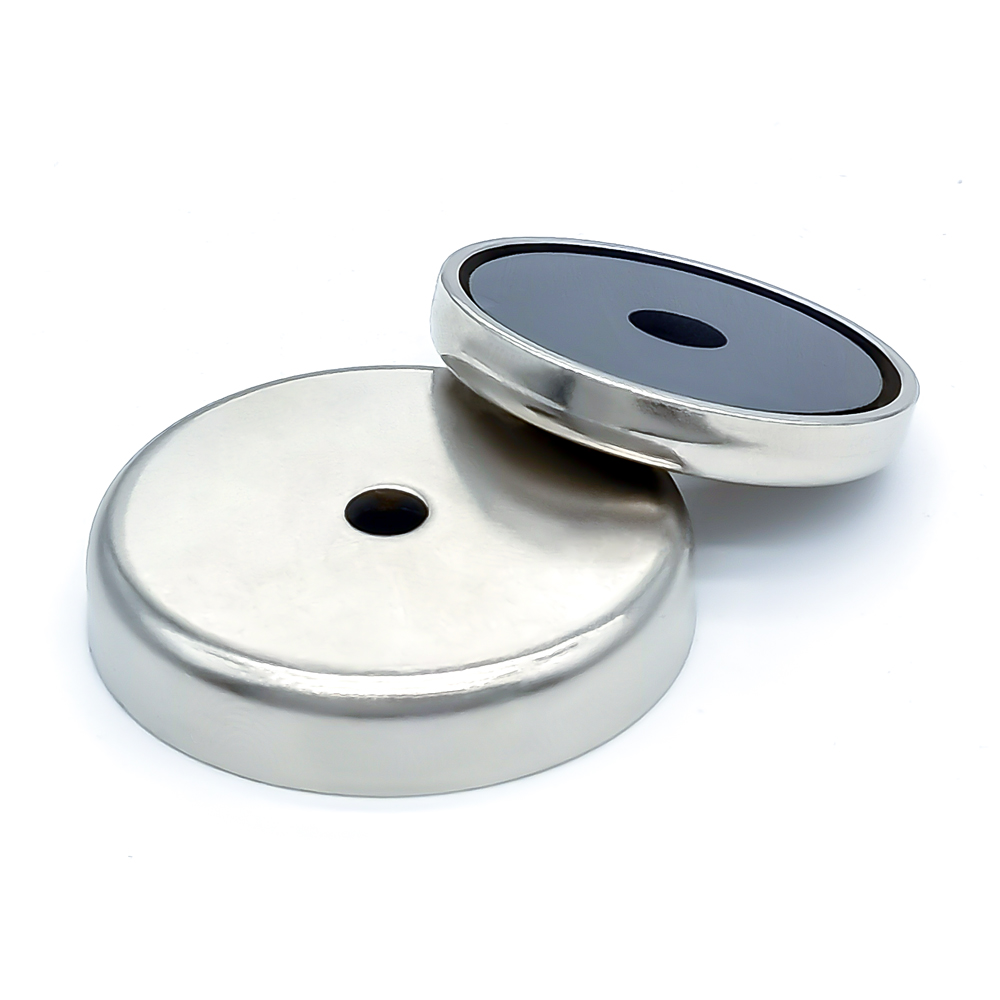
Selecting the wrong magnetic assembly can trigger premature mechanical failure, create significant safety hazards, or unnecessarily inflate your manufacturing budget. In demanding industrial and commercial applications, precision matters deeply. Engineers frequently turn to specialized magnetic solutions to solve complex fastening and mounting problems securely. Here, Pot Magnets prove absolutely invaluable. They use a robust steel shell to concentrate the internal magnetic field onto a single active face. This brilliant geometric design dramatically increases the overall holding force compared to standard bare magnets.
Your core engineering decision usually comes down to choosing between two dominant materials. You can opt for high-strength Neodymium (NdFeB) or highly durable Ferrite (Ceramic). Neither option is universally superior across all environments. Making the exact right choice requires a strict calculation of your continuous operating temperature, surrounding environmental hazards, available spatial footprint, and the precise required pull force. We will explore how to perfectly match the magnetic material to your specific structural requirements below.
Space vs. Strength: Neodymium pot magnets offer unmatched holding force in tight footprints, while Ferrite requires a larger surface area to achieve similar strength.
Thermal Limits: Ferrite pot magnets reliably withstand temperatures up to 250°C, whereas standard Neodymium degrades rapidly above 80°C.
Corrosion Resistance: Ferrite is inherently highly resistant to corrosion and moisture; Neodymium requires protective plating and is vulnerable if scratched.
Cost Efficiency: Ferrite is the most cost-effective choice for large-scale deployments where space and extreme holding force are not the primary constraints.
Understanding the core concept behind these magnetic assemblies is crucial for successful implementation. A standard bare magnet emits a magnetic field freely in all directions. However, placing that raw magnet inside a precision-machined steel cup changes the physics entirely. The steel shell effectively channels the magnetic circuit. It restricts the magnetic flux lines and forces them entirely onto one single active face. This prevents energy from bleeding out the sides or the back of the assembly.
This focused engineering yields a massive mechanical outcome. The shell design multiplies the raw pull force of the enclosed magnet significantly. This geometric concentration makes the assembly ideal for rigid clamping, secure structural mounting, and heavy lifting tasks. They excel at direct-contact holding rather than long-distance attraction. A bare magnet might pull a loose metal object from several inches away. Conversely, the shelled design requires flush direct contact but grips incredibly hard once successfully attached to a metal target.
We must also recognize the strict relevance of the external housing. The shell material dictates the overall environmental durability of your mounting point. Manufacturers typically use galvanized steel, zinc-plated carbon steel, or marine-grade stainless steel for the housing. This metal barrier protects the inherently brittle internal magnet from sudden mechanical impacts.
Here is a detailed breakdown of how the steel shell optimizes performance:
Flux concentration: Redirects stray magnetic fields directly to the contact surface, vastly increasing grip strength.
Impact protection: Guards the internal magnet core against chipping, shattering, or cracking during heavy industrial use.
Mounting versatility: Provides built-in mechanical attachment points like threaded holes, studs, or precise countersinks.
Vibration dampening: Absorbs mechanical shock waves generated by nearby heavy machinery or moving vehicle chassis.
When your specific application demands absolute maximum strength, Neodymium Pot Magnets are the clear, undisputed choice. They utilize the strongest permanent magnetic material commercially available in the world today. Engineers rely on them daily to solve complex spatial challenges.
These assemblies meet rigorous success criteria in highly demanding environments. They are best for applications requiring maximum holding force where you face strict space or weight constraints. Common industrial use cases include compact retail displays, tight mechanical fixtures, robotic grippers, and precise sensor mounts. Automotive designers rely on them heavily when they need a massive grip but only have a few millimeters of clearance available behind a dashboard panel.
Their primary performance characteristic is an absolutely incredible power-to-size ratio. A tiny assembly no larger than a standard coin can easily hold over 20 pounds of sheer static weight. This exceptional density allows product designers to shrink overall product dimensions confidently. You can miniaturize complex tools and metal fixtures without sacrificing holding reliability or structural safety.
However, buyers must address the known implementation risks transparently. Standard rare-earth material comes with distinct physical limitations. First, it permanently loses its fundamental magnetization if exposed to temperatures above 80°C (176°F). You simply cannot use standard grades inside high-heat industrial ovens, near active exhaust pipes, or within engine compartments. Second, the material is highly susceptible to rapid oxidation and rust. It relies entirely on its external coating, typically a precise Ni-Cu-Ni triple layer or a durable rubber over-mold. If a sharp scratch compromises this delicate coating, the core will oxidize, swell, and degrade rapidly.
Ferrite alternatives excel precisely where rare-earth materials struggle or fail. They utilize a hard ceramic magnetic core known for extreme environmental resilience. While they lack the sheer brute force of rare-earth models, they provide unparalleled longevity in hostile environments.
The success criteria for ferrite assemblies lean heavily toward challenging outdoor or industrial settings. They are perfectly suited for permanent outdoor structural applications like security gate latches or agricultural equipment mounts. They thrive in high-heat industrial environments like busy welding shops, commercial powder-coating lines, and active foundries. They also completely dominate high-volume commercial manufacturing where strict budget controls matter deeply. If your project involves heavy ambient moisture, harsh weather, or severe heat, ferrite provides absolute peace of mind.
You should emphasize their specific performance characteristics during your design phase. Their inherent corrosion resistance is practically unbeatable. The ceramic magnet itself often requires no protective plating whatsoever. It simply does not rust like an iron-based alloy. Furthermore, they boast excellent, proven thermal stability. Standard ferrite assemblies operate effectively and safely in continuous temperatures up to 250°C (482°F). They maintain their core magnetic integrity long after competing materials have failed entirely.
Yet, you must also note the primary physical tradeoff. Ferrite holds significantly lower magnetic energy internally. Achieving heavy-duty pull forces requires a much larger and heavier steel assembly compared to rare-earth options. If you need to securely hold 50 pounds of weight, a ferrite base will require substantially more surface area. You must ensure your product design can physically accommodate a considerably larger mounting footprint.
Selecting the perfect assembly requires a highly systematic approach. You must evaluate your specific engineering requirements against the absolute physical limits of each raw material. Guesswork leads directly to product failure. We provide a clear, standardized decision matrix below to guide your initial specification process accurately.
Comparison Matrix: Performance Dimensions | ||
Evaluation Dimension | Neodymium (NdFeB) | Ferrite (Ceramic) |
|---|---|---|
Magnetic Strength | Extremely High | Low to Moderate |
Max Operating Temp | 80°C (Standard Grades) | 250°C |
Corrosion Resistance | Low (Requires Strict Plating) | Very High (Naturally Resistant) |
Relative Bill of Materials | Premium Cost | Highly Economical Cost |
Ideal Physical Footprint | Tight, heavily restricted spaces | Large, unconstrained surface areas |
Temperature limits act as the definitive hard stop in magnetic engineering. The underlying logic here remains totally straightforward. If your continuous ambient operating temperature exceeds 80°C, you must default to ferrite materials immediately. Alternatively, you could specify highly specialized, exceptionally costly high-temp neodymium grades. Furthermore, environmental exposure heavily dictates material choices. If your assembly operates submerged in water or faces exposure to harsh industrial chemicals, you must adapt. A ferrite base paired directly with a marine-grade stainless steel shell works beautifully. You could also utilize a fully rubber-coated rare-earth variant to block moisture ingress entirely.
Physical spatial dimensions almost always dictate your final component selection. The logic centers squarely on available metal mounting area. Sometimes the designated mounting area is highly restricted. You might be designing tiny micro-assemblies, low-profile wall brackets, or hidden magnetic door clasps. In these extremely tight scenarios, rare-earth material is the only viable path forward. It is the only material dense enough to achieve the necessary clamping force inside a tiny dimensional boundary.
Procurement realities constantly influence major engineering decisions. The fundamental logic focuses on overall production volume. Consider scaling your mass production to tens of thousands of units. You might be manufacturing standard commercial retail signage, simple magnetic sweeping tools, or basic warehouse workshop accessories. For these high-volume commercial applications, ferrite offers a highly predictable, extremely economical bill of materials. It keeps your unit economics favorable when extreme, concentrated holding force is unnecessary.
Theoretical catalog specifications rarely match real-world physical application conditions. You must understand exactly how magnetic forces behave in practical, messy scenarios. We need to clarify a crucial technical distinction first. "Pull Force" refers strictly to the perpendicular separation of a magnet from a thick, perfectly flat, unpainted solid steel plate. Manufacturers always test their magnets this way under perfect, ideal laboratory conditions. Conversely, "Shear Force" refers to the magnet's resistance against sliding down a smooth vertical surface.
We issue a strong warning to all hardware buyers. Real-world shear force is typically only 15% to 25% of the officially stated pull force. If a catalog lists an impressive 100-pound pull rating, it might slide slowly down a vertical steel wall with just 20 pounds of weight attached. The sheer physics of gravity and low surface friction cause this massive strength reduction. We highly recommend using rubber-coated assemblies to combat this sliding effect directly. The external rubber introduces significant mechanical friction against the target surface. This vastly improves vertical shear capacity and prevents surface scratching simultaneously.
Several external material variables will also significantly alter your success rate. The target surface itself dictates the actual maximum holding power. Consider the following common real-world obstacles:
Thin sheet metal: Magnets cannot fully saturate thin metal panels, drastically reducing their grip strength.
Layers of paint: Thick industrial paint acts as a physical barrier, creating distance between the shell and the steel.
Air gaps and heavy rust: Uneven surfaces prevent flush contact, destroying the focused magnetic circuit immediately.
These surface variables will drastically reduce the holding force of both material types. Always test your chosen assembly directly on the actual surface you intend to use.
Ultimately, neither magnetic material is universally "better" than the other. Rare-earth material wins decisively on sheer brute strength and ultra-compact design. Ceramic material dominates when you need exceptionally high heat resistance, excellent natural corrosion protection, and strict budget control across large production runs.
Your initial shortlisting logic should remain relatively simple. If your operating temperature is very high or mounting space is abundant, choose the durable ceramic option. If you face severe space restrictions and need massive grip strength instantly, choose the rare-earth option.
We strongly encourage thorough design evaluation via active, real-world prototyping. You should contact an experienced engineering or sales team to calculate your specific structural magnetic load requirements. Request physical component samples today to test them directly within your actual application environment.
A: Yes, but only if they are fully sealed to prevent the internal core from rapidly oxidizing. Standard platings like nickel will eventually fail if exposed to harsh rain or salty weather. We highly recommend using specialized rubber-coated variants for outdoor use. The durable rubber encapsulation perfectly seals out rain and humidity, keeping the vulnerable core fully protected.
A: Advertised weights rely on testing against thick, perfectly flat, unpainted solid steel. Common application errors include attaching the magnet to thin contact metal, highly uneven surfaces, or over heavy paint and rust. Additionally, confusing vertical shear capacity with perpendicular pull force causes many unexpected failures. A magnet sliding down a wall holds significantly less weight.
A: They are generally much safer around sensitive electronics than standard raw magnets. Because the external steel shell channels the magnetic field directly to a single contact face, these assemblies project a very shallow stray magnetic field. This safely contained circuit minimizes unwanted magnetic interference, making them highly suitable for mounting near delicate equipment.
A: No. Both ferrite and rare-earth materials are incredibly brittle, much like fragile ceramic dinnerware. Attempting to machine, cut, or drill them will cause severe cracking, shattering, and immediate demagnetization due to heat buildup. Buyers must purchase pre-drilled configurations directly from the manufacturer, such as countersunk, through-hole, or threaded stud variations.


