We are constantly trying to improve ourselves in new thoughts, new technology and new working methods.

Views: 0 Author: Site Editor Publish Time: 2026-07-02 Origin: Site


High-performance servo motors require maximum torque within minimal spatial footprints. Standard magnetic materials increasingly struggle to meet this intense engineering demand. Modern robotics and automated systems simply cannot compromise on either size or power output. For engineering and procurement teams, integrating a Neodymium Magnet is the definitive standard for achieving high torque-to-weight ratios. However, specifying the wrong magnetic grade can lead to catastrophic motor failure. Overheating and irreversible flux loss remain persistent threats in compact, high-speed motor designs.
This guide provides a straightforward, actionable evaluation framework. We will thoroughly explore selecting and sourcing Neodymium Magnets in Servo Motor applications. You will uncover crucial insights regarding thermal realities, mechanical integration risks, and reliable supplier vetting processes. Buyers must understand these variables to build reliable, high-efficiency drive systems.
Neodymium magnets exponentially increase torque density and reduce rotor inertia, enabling highly dynamic servo response times.
Standard N-grades (e.g., N52) are prone to thermal demagnetization; servo motors typically require high-coercivity grades (SH, UH, or EH) to withstand operating temperatures.
Corrosion resistance and precise dimensional tolerances are non-negotiable for long-term motor reliability.
Supplier selection must hinge on batch-to-batch magnetic flux consistency and strict environmental compliance (RoHS/REACH).
Engineers face a relentless push to miniaturize drive systems. Modern robotics demand smaller joints. Automated guided vehicles require flatter drive units. OEMs must shrink the physical footprint of their machines. However, they cannot sacrifice power output. They also cannot increase energy consumption. This creates a difficult engineering challenge. Ferrite magnets traditionally powered many industrial motors. Today, they often consume too much space. A standard ferrite motor simply cannot fit into a modern compact actuator. You need a denser magnetic energy source.
Consider the immediate impact on torque density. Neodymium offers an exceptionally high remanence (Br). It frequently exceeds 1.3 Tesla. Ferrite struggles to reach a mere 0.4 Tesla. This massive gap translates directly into tangible performance. You can achieve significantly higher motor torque in a much smaller package. The magnetic field pushes across the air gap with greater intensity. This stronger field drives the rotor with exceptional force.
Dynamic response also improves drastically. Servo applications demand highly precise movements. Rotors need to accelerate and decelerate instantly. Neodymium assemblies weigh much less than ferrite equivalents. Lighter magnetic assemblies reduce overall rotor inertia. Reduced inertia allows for faster, more accurate servo response times. The motor wastes less energy fighting its own mass.
You must balance the cost-to-performance ratio carefully. Neodymium carries a noticeably higher upfront material cost. You offset this expense through smart system-level savings. A smaller magnetic volume allows you to design smaller motor housings. You also reduce heavy copper winding requirements. These compounded material savings often justify the initial magnet investment.
Here are three direct benefits of upgrading from baseline ferrite materials:
Increased torque density per cubic centimeter of motor volume.
Lower rotor inertia for snappy, highly dynamic acceleration.
Reduced overall motor weight and smaller housing dimensions.
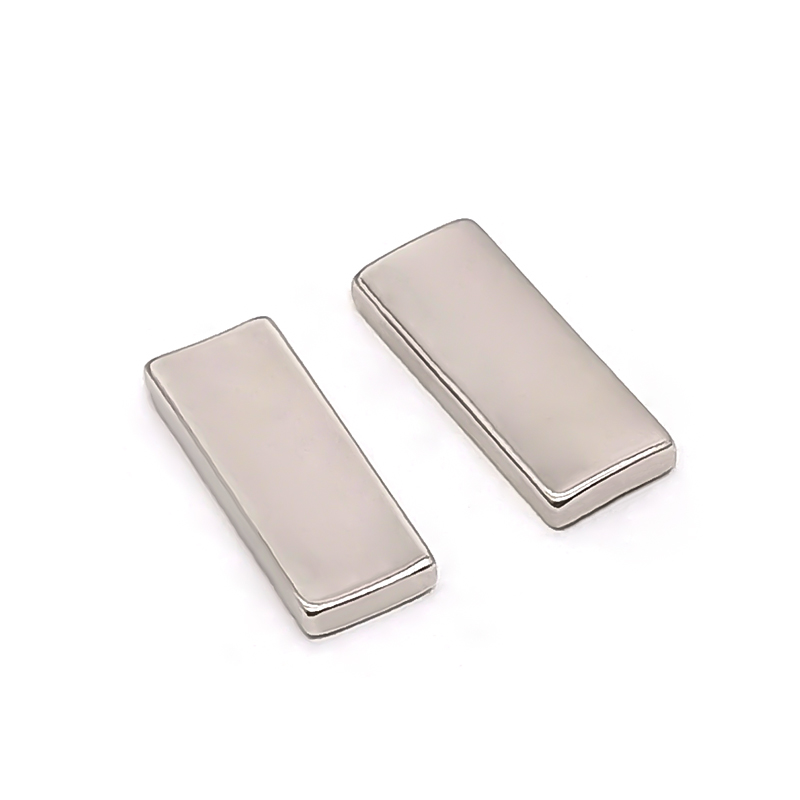
Servo motors generate significant stator heat during rapid duty cycles. This heat constraint represents a harsh operational reality. A standard N52 magnet offers incredible room-temperature strength. However, it begins to irreversibly lose flux capacity around 80°C. You risk catastrophic motor failure if you ignore this thermal limit. Once the magnet crosses its specific temperature threshold, it will not recover its original pull force upon cooling.
Engineers must decode specific grade suffixes to ensure reliability. These letters dictate the thermal survival limits of your motor. We rely heavily on specialized high-temperature grades for industrial applications. Adding heavy rare earth elements increases the magnet's heat resistance.
M & H Grades: These suit light-duty applications. They safely operate up to 100°C or 120°C. You might use these in small packaging machinery.
SH, UH, & EH Grades: Heavy industrial servo motors mandate these robust grades. They withstand extreme environments between 150°C and 200°C. You need these for continuous-duty CNC machines.
You must calculate the design trade-off reality carefully. A strict inverse relationship exists in magnet manufacturing. Maximum magnetic strength (MGOe) drops as thermal resistance increases. Thermal resistance relies on intrinsic coercivity (Hcj). Heavy rare earth elements displace iron in the alloy. This reduces the overall magnetic output. You simply cannot manufacture an N52EH grade. The metallurgical limits prevent it. You must compromise. We recommend calculating this balance based strictly on your motor's maximum expected duty cycle.
Standard Temperature Ratings for Neodymium Grades | ||
Grade Suffix | Maximum Operating Temperature (°C) | Typical Application |
|---|---|---|
None (e.g., N52) | 80°C | Consumer electronics, light sensors |
M (e.g., N48M) | 100°C | Light-duty actuators |
H (e.g., N45H) | 120°C | Standard automation motors |
SH (e.g., N42SH) | 150°C | Industrial servo motors |
UH/EH (e.g., N38EH) | 180°C - 200°C | Heavy-duty robotics, high-speed spindles |
Neodymium oxidizes rapidly when exposed to ambient moisture. You must address corrosion and coating failures early in the design phase. Evaluate your coating options based strictly on the motor's operating environment. Cleanroom servos might only require a basic zinc or thin epoxy layer. Conversely, IP67 washdown servos demand robust Ni-Cu-Ni (Nickel-Copper-Nickel) plating. Some extreme marine applications utilize hermetically sealed stainless steel sleeves to prevent any moisture ingress.
Sensor interference creates another major design hurdle. Stray magnetic fields easily disrupt absolute or incremental onboard encoders. Hall-effect sensors rely on precise magnetic readings. Unintended flux leakage from the main rotor can blind these sensors. You must require magnetic shielding during the initial design phase. Alternatively, you can use strategic spatial distancing. Keep the sensitive electronics far from the primary magnetic flux path. Proper magnetic circuit design directs the flux path exclusively toward the stator.
Assembly and retention present strict mechanical realities. Neodymium is notoriously brittle. It shatters easily upon sharp physical impact. You must outline safe retention methods for your rotor assembly. High-speed servos spin at thousands of revolutions per minute. Massive centrifugal forces will tear poorly secured magnets apart. We recommend specialized, high-temperature industrial adhesives. You should also incorporate carbon fiber banding or structural metallic rotor sleeves. These physical barriers firmly lock the magnets in place. They prevent the brittle material from shattering and destroying the internal stator windings.
You must demonstrate technical trustworthiness by knowing exactly when to pivot. Sometimes, you should not use a Neodymium Magnet. Samarium Cobalt (SmCo) serves as a highly reliable alternative material. Engineers rely on SmCo when environmental conditions push beyond standard limits.
Temperature extremes often dictate this necessary pivot. Suppose your servo motor operates consistently above 200°C. Aerospace actuators and deep-hole drilling equipment frequently hit these extreme marks. Samarium Cobalt becomes the mandatory choice here. It possesses a notably lower peak strength than neodymium. It is also considerably more brittle and harder to machine. Despite these mechanical drawbacks, its immense temperature stability prevents critical flux loss. It simply will not demagnetize in blistering heat.
Corrosion extremes also highly favor SmCo. Highly corrosive chemical environments easily degrade standard protective coatings. Coating failure on a neodymium rotor quickly causes severe oxidation. The magnet swells, flakes, and rubs against the stator walls. This physical interference ultimately causes catastrophic motor seizure. SmCo requires no protective coating whatsoever. This inherent chemical stability makes it a brilliant fallback option for brutal, highly caustic environments.
Chart: Decision Matrix for Magnet Selection | ||
Requirement Matrix | Neodymium (NdFeB) | Samarium Cobalt (SmCo) |
|---|---|---|
Maximum Torque Needed | Excellent (Highest Br) | Moderate |
Operating Temp > 200°C | Fails (Demagnetizes) | Excellent (Highly Stable) |
Corrosion Resistance | Poor (Requires Coating) | Excellent (No Coating Needed) |
Material Cost | Moderate | High |
You must secure reliable batch consistency for production scale. Magnetic flux deviation between batches causes severe mechanical issues. It leads to erratic servo calibration on your assembly line. One motor might perform perfectly, while the next underperforms. Require your suppliers to provide comprehensive demagnetization curves. They must also supply routine Cpk (Process Capability) data. A Cpk score above 1.33 indicates a stable, highly repeatable manufacturing process. Accept nothing less for critical motor components.
Dimensional tolerances require equally strict procurement oversight. Precision machining maintains the critical air gaps between the rotor and stator. You should specify incredibly tight tolerances, such as +/- 0.05mm. Inconsistent dimensions create uneven magnetic fields. This unevenness induces motor cogging, which ruins smooth servo operation. Quality suppliers utilize advanced grinding techniques to meet these strict physical demands.
You must prioritize regulatory compliance and ethical supply chain management. Monitor rare earth market volatility to anticipate sudden pricing shifts. Ensure your sourced materials strictly meet RoHS and REACH standards. You should also verify conflict-mineral compliance through detailed supplier audits. This transparent authoritativeness protects your brand reputation in global markets.
Take immediate shortlisting action. Start your procurement process with low-volume prototyping. Request detailed 72-hour salt-spray testing reports from your shortlisted vendors. Demand certified thermal aging test data before committing to full-scale production runs. This methodical, evidence-oriented vetting prevents wildly expensive product recalls later.
Sourcing the right magnetic material involves strict technical balancing. It is never just about maximizing raw pull force. Successful integration requires a deep understanding of operational environments and mechanical limitations.
Understand the Balance: Successful integration requires balancing thermal coercivity, physical durability, and precise dimensional tolerances.
Map the Environment: Always define your exact operating environment early to prevent unexpected corrosion and premature mechanical failures.
Finalize Duty Cycles: Advise your engineering team to strictly finalize the motor's maximum operating temperature before seeking quotes.
Request Verified Data: Only engage qualified suppliers who provide transparent Cpk data and verified thermal aging reports.
Take these action-oriented next steps today. Map your exact continuous torque requirements alongside your spatial constraints. Then, request custom samples from qualified, fully compliant magnet manufacturers to begin physical prototyping.
A: Yes. Strong magnetic fields can disrupt hall-effect sensors and magnetic encoders. Proper magnetic circuit design and shielding are required to direct the flux path exclusively toward the stator.
A: Industrial-grade, high-temperature epoxies combined with mechanical retention (like stainless steel or Kevlar retaining sleeves) are standard to prevent the brittle magnets from detaching under high centrifugal forces.
A: This is typically due to thermal degradation. If the motor is pushed past the magnet's maximum operating temperature (Curie temperature limits), irreversible demagnetization occurs, requiring rotor replacement.


