We are constantly trying to improve ourselves in new thoughts, new technology and new working methods.

Views: 0 Author: Site Editor Publish Time: 2026-07-05 Origin: Site


Engineering modern electric motors and aerospace components pushes materials to their absolute limits. At the heart of these innovations, a standard Neodymium Magnet often faces a critical enemy: extreme heat.
Standard grades degrade rapidly once ambient temperatures exceed 80°C. This intense thermal stress causes irreversible flux loss. It ultimately leads to catastrophic system failure in demanding applications like automotive sensors or traction motors. Transitioning away from standard grades requires careful technical planning. You must balance thermal stability directly against magnetic strength. Component geometry and supply chain realities also play massive roles in this decision.
This guide provides a straightforward technical framework for engineering teams. You will learn how to evaluate, specify, and procure the correct High Temperature Neodymium Magnet. We outline precise evaluation criteria to ensure you avoid over-engineering your assemblies or under-specifying thermal tolerances.
Standard Neodymium (N) grades are generally limited to 80°C; specialized high-temperature grades (M, H, SH, UH, EH, AH) can withstand up to 230°C.
Maximum Operating Temperature is not an absolute limit; it depends heavily on the magnet’s geometry, specifically the Permeance Coefficient (Pc).
Specifying high-temperature grades involves a strict trade-off: higher thermal resistance typically requires heavy rare earth additions (Dysprosium/Terbium), increasing cost and sometimes reducing overall magnetic strength.
For sustained operations above 230°C, engineers must typically transition from Neodymium to Samarium Cobalt (SmCo) magnets.
Heat attacks the internal domain structure of rare earth materials. Understanding this mechanism prevents costly engineering mistakes. We separate thermal degradation into two distinct categories: reversible and irreversible loss.
Temporary flux loss occurs constantly in normal operations. As your motor heats up, the magnetic output drops marginally. Once the system cools, the magnetic field recovers completely. This represents reversible loss. Irreversible loss poses a far greater threat. If temperatures exceed the material's thermal limits, internal magnetic domains scramble permanently. Cooling the system down does not fix this issue. You must physically remagnetize the material to restore baseline performance. In commercial environments, irreversible loss means disassembling the machinery. The resulting warranty replacements destroy product profitability and brand trust.
Many engineers misunderstand the Curie Temperature (Tc). They read a material data sheet showing a Tc of 310°C. They incorrectly assume the part works perfectly up to this threshold. This assumption causes immediate system failures. Tc simply marks the catastrophic point where the material loses all magnetic properties permanently. Structural degradation happens much earlier. Maximum Operating Temperature (Tmax) serves as your practical evaluation metric. It shows the highest ambient heat the component can handle before suffering irreversible domain shifts.
Evaluating Intrinsic Coercivity (Hcj) is mandatory. This metric acts as your primary indicator of thermal resistance. High Hcj ratings reflect a robust internal structure. Highly coercive materials actively resist the demagnetizing forces generated by intense thermal agitation. When you need superior heat tolerance, you must specify a material boasting a high Hcj value.
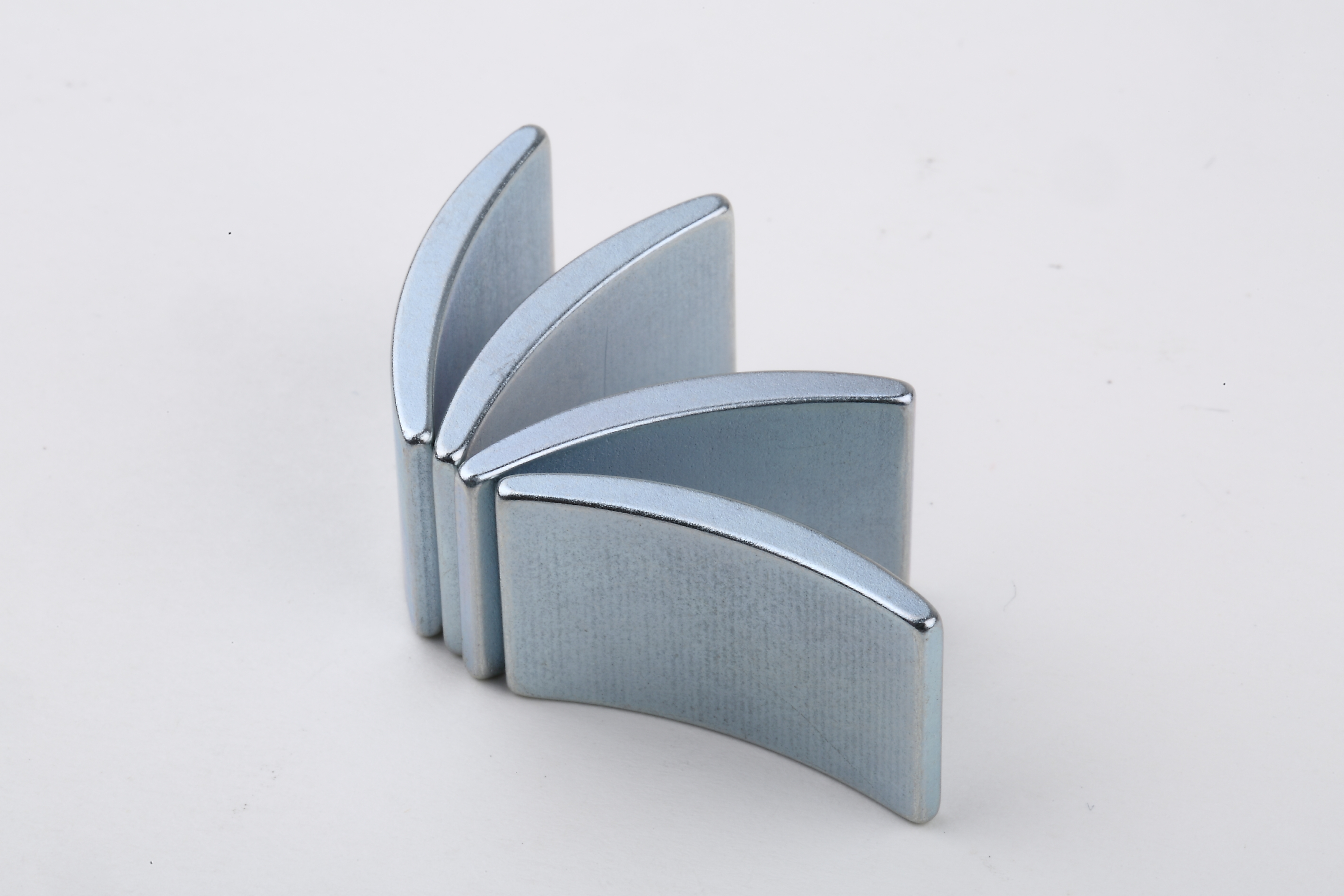
Manufacturers use a universal suffix system to classify thermal resistance. This nomenclature dictates the maximum operating temperatures under ideal conditions. You must memorize these suffixes to communicate effectively during procurement.
We assume an ideal Permeance Coefficient (Pc) greater than 1.0 when reviewing these standard limits. The table below outlines the recognized high-temperature categories.
Grade Suffix | Classification | Maximum Operating Temperature (Tmax) |
|---|---|---|
No Suffix (N) | Standard | Up to 80°C |
M | Medium | Up to 100°C |
H | High | Up to 120°C |
SH | Super High | Up to 150°C |
UH | Ultra High | Up to 180°C |
EH | Extra High | Up to 200°C |
AH | Abnormal High | Up to 230°C |
You cannot source an "N55AH" grade. Physics strictly forbids this combination. Increasing a magnet's temperature threshold directly limits its maximum energy product (BHmax). Standard N52 grades offer massive magnetic strength but degrade quickly in warm environments. Conversely, extreme high-heat grades cap out around 33 to 38 MGOe.
This trade-off stems from material chemistry. Achieving high thermal resistance requires doping the alloy. Manufacturers introduce heavy rare earth elements to lock the magnetic domains in place. These elements consume physical space inside the alloy matrix. They displace the core neodymium atoms. Less neodymium means less overall magnetic output. You must always negotiate this balance between raw strength and thermal endurance.
Never specify a grade based on a single Tmax number. You must request temperature-specific demagnetization curves from your manufacturing partners. These charts map the exact relationship between magnetic flux density (B) and the demagnetizing field (H) at elevated temperatures.
You must locate the "knee" of the B-H curve. The knee represents the critical inflection point where the line suddenly drops off. If your operating point falls below this knee at your target temperature, the material will suffer irreversible flux loss. Engineers must ensure the expected operating conditions keep the component safely above this critical threshold at all times.
Maximum operating temperatures are not absolute material properties. They depend entirely on the physical shape of the component. The Permeance Coefficient (Pc) quantifies this geometric relationship. It compares the length of the magnetic axis to its cross-sectional area.
Consider a practical implementation reality. A thin, flat disc will demagnetize at a much lower temperature than a tall, thick cylinder. This happens even if both components share the exact same chemical grade. A higher length-to-diameter ratio helps maintain internal magnetic alignment against thermal agitation.
Suppliers establish standard high-temperature ratings using an ideal Pc of 2.0. Most modern motor designs feature flat, shallow shapes resulting in a Pc closer to 0.5 or 0.8. If your design utilizes a low Pc, you must specify a higher thermal grade to compensate for the geometric vulnerability.
Extreme thermal requirements introduce significant supply chain risks. High-heat grades rely heavily on Dysprosium (Dy) and Terbium (Tb). These specific elements are scarce and geographically concentrated. Their inclusion drastically inflates procurement costs.
Evaluate your true environmental requirements carefully. Do not over-specify the thermal grade. If your sensor only reaches 110°C, specify an "H" grade. Do not demand an "SH" grade merely for an arbitrary safety margin. Unnecessary heavy rare earth additions inflate component expenses and expose your production line to pricing volatility.
Every engineering project eventually hits a thermal ceiling. Even the most advanced AH grades struggle past 230°C. We establish the 200°C to 230°C range as the critical friction point. Beyond this threshold, Neodymium performance degrades sharply. You must pivot to alternative materials for sustained operations.
Samarium Cobalt (SmCo) serves as the industry standard for extreme heat. It provides exceptional thermal stability. The chart below summarizes the fundamental differences when evaluating these two distinct material families.
Material Comparison Chart: High-Temp NdFeB vs SmCo | ||
Evaluation Metric | High-Temp NdFeB (e.g., AH Grade) | Samarium Cobalt (SmCo) |
|---|---|---|
Max Operating Temp | ~230°C (Highly dependent on Pc) | Up to 350°C |
Magnetic Strength | High (33-38 MGOe) | Moderate (20-32 MGOe) |
Corrosion Resistance | Poor (Requires robust plating) | Excellent (Often used unplated) |
Mechanical Strength | Moderate (Prone to chipping) | Low (Extremely brittle) |
Supply Chain Cost | High (Due to Dy/Tb reliance) | Historically higher and volatile |
SmCo advantages extend beyond simple heat tolerance. It boasts superior corrosion resistance. You can frequently eliminate the need for protective plating entirely. This simplifies manufacturing and reduces tight tolerance stack-ups in precision assemblies.
However, SmCo carries distinct disadvantages. It exhibits lower mechanical strength compared to other rare earths. The material is incredibly brittle. It chips easily during automated assembly processes. Historically, Cobalt pricing remains high and subject to severe market volatility. You must weigh these manufacturing challenges against the undeniable thermal benefits.
Transitioning from concept to mass production requires rigorous validation. You cannot rely solely on theoretical data sheets. When specifying a High Temperature Neodymium Magnet, you must implement strict procurement protocols.
Follow these distinct steps to safeguard your manufacturing process:
Execute Thermal Cycling Tests: Implement internal testing protocols before approving mass production. Expose prototypes to peak operational temperatures repeatedly. Measure the magnetic flux before and after these cycles. Validate that irreversible flux loss remains within your engineering tolerances.
Verify Coating Compatibility: Elevated operating temperatures easily degrade standard Ni-Cu-Ni plating. The nickel layers can blister or flake off under intense thermal stress. You must evaluate alternative surface protections. Aluminum coatings, zinc plating, or high-temp epoxy resins often provide superior survival rates in harsh environments.
Demand Supplier Documentation: Never accept generic compliance sheets. Require specific performance data during your RFQ process. Mandate custom B-H curves plotted exactly at your expected Tmax. Request detailed CPK data to ensure batch-to-batch consistency. Establish firm Hcj minimums in your final engineering drawings.
Partnering closely with your manufacturer early in the design phase prevents costly delays. Share your full assembly geometry and thermal profiles. Allow their materials science teams to validate your selected grade.
Specifying high-temperature magnetic materials requires a delicate balancing act. You must weigh Intrinsic Coercivity (Hcj) against physical geometry and raw material costs. Ignoring the Permeance Coefficient or misunderstanding the Curie Temperature will inevitably lead to assembly failures.
Take immediate action to secure your designs. First, review your system's true thermal loads under peak stress. Next, calculate your assembly's exact Permeance Coefficient. Finally, engage with a specialized manufacturer to request custom B-H curve analysis. By following these precise steps, you guarantee optimal performance without absorbing unnecessary supply chain risks.
A: It depends on the heat level. If the temperature stays below the Maximum Operating Temperature (Tmax), the magnet experiences reversible loss. It regains full strength upon cooling. If it exceeds Tmax, it suffers irreversible loss. Cooling will not fix it. You must physically remagnetize the component using an industrial magnetizer. If temperatures hit the Curie point, structural changes become permanently fatal.
A: Thermal resistance ties directly to the Permeance Coefficient (Pc). The Pc compares a magnet's length to its cross-sectional area. A higher length-to-diameter ratio creates a stronger internal magnetic circuit. This robust internal alignment effectively fights off the demagnetizing forces caused by thermal agitation. Therefore, taller or thicker magnets inherently resist heat better than thin discs of the identical grade.
A: No. Coatings do not insulate against extreme temperatures. Standard plating materials like Nickel, Zinc, or Epoxy exist purely to protect the vulnerable rare earth alloy from rapid oxidation and corrosion. Thermal resistance remains strictly a core material property dictated by the specific chemical grade and its Intrinsic Coercivity (Hcj).
A: The Absolute High (AH) grade represents the current limit for standard neodymium technology. Under ideal geometric conditions (a high Pc), AH grades withstand up to 220°C to 230°C. For applications demanding sustained ambient temperatures beyond this strict threshold, engineers must abandon neodymium entirely and switch to Samarium Cobalt (SmCo) or Alnico materials.


