We are constantly trying to improve ourselves in new thoughts, new technology and new working methods.

Views: 0 Author: Site Editor Publish Time: 2026-08-23 Origin: Site


Hardware and acoustic engineers constantly face a difficult balancing act during product development. You must deliver uncompromising magnetic performance while strictly adhering to rigorous Bill of Materials (BOM) constraints. Achieving this delicate equilibrium determines whether a product achieves market success or fails due to unexpected budget overruns. Modern manufacturing faces heavy inflation and unpredictable component shortages, making budget control more critical than ever.
While rare-earth materials currently dominate tech headlines for enabling aggressive device miniaturization, Permanent Ferrite Magnets quietly remain the true backbone of mass-market manufacturing today. They provide unmatched supply chain stability and highly predictable pricing models for high-volume production. By leveraging abundant global resources, they shield your assembly lines from sudden market shocks.
This article provides a clear technical and commercial evaluation framework for utilizing these components in motor and acoustic applications. We will explore how to successfully implement this reliable technology into your complex engineering designs. You will quickly determine if the necessary physical design trade-offs align properly with your future product roadmap.
Cost Predictability: Ferrite magnets are immune to the extreme price volatility associated with rare-earth metals, ensuring stable long-term manufacturing costs.
Environmental Durability: Inherent resistance to corrosion and high operating temperatures makes them ideal for demanding motor and automotive applications without requiring protective coatings.
Acoustic Advantages: In speaker design—particularly subwoofers—the larger mass of ferrite components aids in thermal dissipation for the voice coil.
Design Trade-offs: The primary compromises are size and weight; ferrite is not suitable for micro-electronics where space-to-power ratios are critical.
Relying exclusively on rare-earth materials poses significant business risks for modern manufacturers. Price spikes happen frequently due to shifting global markets and highly concentrated mining operations. Geopolitical supply chain bottlenecks further complicate sourcing efforts for these critical components. Complex supply lines make accurate cost forecasting incredibly difficult for corporate purchasing departments. You cannot easily predict your production expenses when core material costs fluctuate daily.
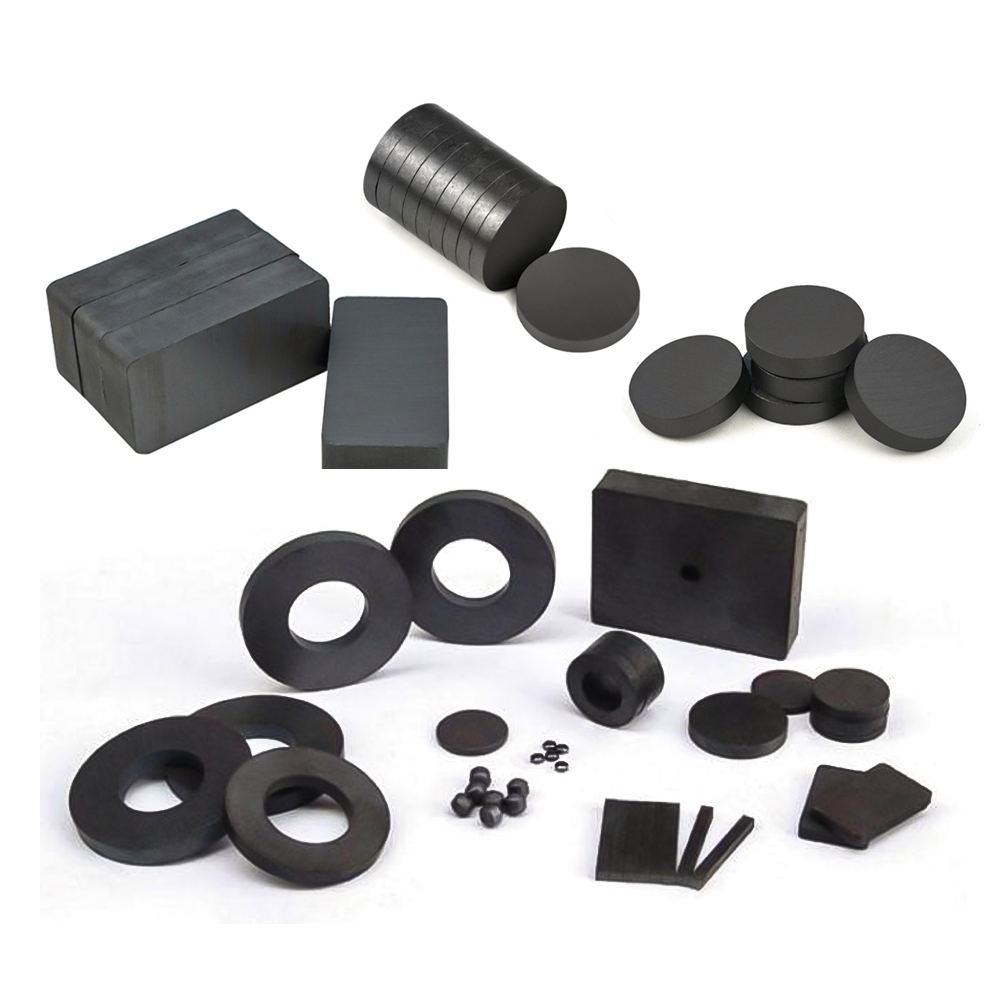
We need a reliable and globally abundant alternative. Ferrite Magnets present a highly accessible solution for continuous manufacturing. These robust ceramic components consist primarily of iron oxide mixed with strontium or barium carbonate. This easily accessible chemical makeup guarantees a incredibly low-cost raw material base worldwide. You rarely face sudden material shortages when specifying these common industrial ingredients.
When should you pivot your manufacturing strategy to this material? The answer relies heavily on your core product priorities. If your physical space constraints remain relatively flexible, you have an ideal opportunity. Transitioning makes sense when unit cost reduction and strict margin protection act as your highest business priorities. Hardware developers building home appliances or large industrial equipment frequently make this exact material pivot to secure their supply chains.
Industrial motors generate intense heat during continuous daily operation. High maximum operating temperatures define reliable motor performance in the field. Permanent Ferrite Magnets routinely handle extreme operating temperatures up to 250°C. They exhibit exceptional intrinsic coercivity, granting them powerful resistance to demagnetization at these elevated temperatures. This thermal stability is absolutely critical for demanding industrial pumps and heavy automotive motors. You do not need expensive dysprosium additives to maintain reliable magnetic performance here.
Operating environments also introduce heavy moisture and harsh chemical exposure. Fortunately, the fundamental chemical makeup of ferrite naturally resists aggressive oxidation. These dense ceramic components simply do not rust over time. Consequently, you can completely eliminate the expensive nickel or epoxy platings required by rare-earth alternatives. This elimination removes an entire costly processing step from your factory manufacturing line.
You must carefully match the magnetic material to the correct motor type for long-term success. Evaluate your application requirements against these common implementation scenarios:
DC Motors: Standard brushed motors rely heavily on these cost-effective components for reliable daily operation.
Wiper Motors: Automotive applications benefit immensely from their wide temperature tolerance and weatherproof nature.
Pump Motors: Natural water resistance makes them ideal for fluid handling systems and washing machines.
Treadmills: Large motor housing size is perfectly acceptable, making the substantial cost savings highly attractive.
Conversely, strict physical miniaturization strictly requires rare-earth solutions. You cannot practically use ferrite in EV traction motors or compact drone motors where every single gram matters immensely.
Audio engineering often suffers from a persistent and unhelpful misconception. Many audiophiles falsely believe neodymium inherently sounds dramatically better than older technologies. The reality of acoustic physics tells a completely different story. The magnetic material merely dictates the physical dimensions and raw motor force of the speaker driver. It does not determine the acoustic purity, distortion levels, or frequency response of the system. A properly designed ferrite motor sounds entirely identical to a carefully designed rare-earth motor.
Heat management quickly destroys delicate voice coils in high-power speaker systems. The larger physical size of ferrite acts as a massive functional heatsink. In heavy subwoofers and professional PA systems, this extra mass actively absorbs excess thermal energy. It significantly improves thermal dissipation for large voice coils during sustained, high-volume audio playback. This crucial heat absorption prevents dangerous power compression when pushing your amplifiers to their absolute limits.
Audio manufacturers must carefully balance acoustic performance against retail price expectations. You can achieve incredible cost efficiency in heavy-duty consumer and professional audio equipment. Home theater systems and heavy guitar amplifiers rarely face strict internal weight limits. In these specific applications, maximizing the cost-per-watt ratio makes this durable ceramic material the obvious engineering choice.
You must evaluate maximum energy products (BHmax) carefully during the initial design phase. Neodymium offers an incredibly strong magnetic field per cubic centimeter, often reaching 50 MGOe. Conversely, ferrite typically maxes out around 4 MGOe. Therefore, it requires a significantly larger volume to match that exact same magnetic field. You have to design your product housings around this specific spatial requirement.
We need a clear analytical framework for evaluating physical weight penalties in product design. Follow this structured approach to determine viability:
Determine the end-product mobility and portability requirements first.
If building a wearable device or portable Bluetooth speaker, extra mass is completely impractical.
If constructing a heavy floor-standing speaker cabinet, added weight is harmless.
In stationary industrial applications, a heavier base can even positively reduce unwanted machine resonance.
We must evaluate the true financial impact of your material choices accurately. You should factor raw material pricing directly into your primary budget planning. Remember to calculate the exact dollar savings from eliminating protective surface coatings entirely. Additionally, factor in the straightforward handling required during factory assembly compared to managing highly volatile rare-earth elements.
Feature Comparison | Ferrite Alternative | Neodymium Benchmark |
|---|---|---|
Cost Stability | Excellent and highly predictable globally | Volatile and highly market-dependent |
Magnetic Strength | Moderate (requires larger physical volume) | Extremely high (allows compact size) |
Corrosion Resistance | Naturally resistant (no protective coating needed) | Poor (strictly requires nickel/epoxy plating) |
Max Operating Temp | Routinely operates up to 250°C standard | Typically degrades quickly between 80°C to 150°C |
These industrial components are essentially rigid ceramic materials by classification. They are inherently brittle by nature. They are highly prone to chipping or cracking upon harsh impact during the assembly process. Your manufacturing lines require proper handling protocols to prevent unnecessary physical material waste. Factory workers must never drop them onto hard concrete floors or strike them forcefully.
Standard block and standard ring sizes are universally available everywhere without extra fees. However, custom shapes like specific arcs or specialized rings change the financial equation significantly. They require custom pressing and high-temperature sintering molds to achieve tight physical tolerances. This introduces an upfront tooling cost you must firmly factor into your initial project budget. Fortunately, once you pay for the initial tooling, the ongoing piece price drops dramatically.
Extreme environmental environments pose very specific operational risks. You face irreversible demagnetization if these components are exposed to extreme cold weather. Temperatures dropping below -40°C establish transparent physical boundaries for safe material usage. The demagnetization curve knee drops sharply at these freezing temperatures. You must verify intended outdoor operating conditions before locking in your final technical specification.
Choosing a reliable global manufacturing partner requires careful and deliberate business vetting. You should look for strict consistency in standard magnetic grades like Y30 or Y35. Inspect their specific dimensional tolerances closely to ensure smooth automated assembly later. Ensure they possess robust in-house testing capabilities to verify batch quality consistently. You should always review their B-H curve documentation for every delivered batch.
Overseas sourcing introduces strict regulatory and international compliance risks. You must prioritize internationally recognized manufacturing certifications when building your vendor list. Look for ISO 9001 for general factory quality management systems. IATF 16949 is absolutely mandatory for any modern automotive applications. Furthermore, ensure full RoHS and REACH compliance to meet strict global environmental standards seamlessly.
We highly recommend a structured and methodical testing approach for any new suppliers. Start your internal validation process with detailed magnetic simulation software (FEA). Request standard off-the-shelf samples to run basic physical prototypes. Complete these critical steps before investing heavy capital into custom steel tooling for mass production.
Validation Phase | Required Engineering Action | Expected Project Outcome |
|---|---|---|
Phase 1: Simulation | Run Finite Element Analysis (FEA) software. | Confirm theoretical magnetic field strength requirements. |
Phase 2: Sampling | Test standard off-the-shelf block samples. | Verify material grade quality and basic consistency. |
Phase 3: Tooling | Invest capital in custom pressing molds. | Produce exact physical dimensions for product fitment. |
Phase 4: Pilot Run | Execute a controlled small batch production. | Confirm assembly line handling and final defect yields. |
Permanent Ferrite Magnets consistently prove to be the most cost-effective solution for large-scale manufacturing. They excel remarkably when product volume and weight remain secondary to strict budget controls. Their inherent resistance to extreme heat and corrosive elements completely eliminates secondary processing costs. This highly reliable performance firmly secures their permanent place in modern acoustic and motor engineering.
Do not leave your next critical hardware design to chance or volatile markets. Contact our dedicated engineering team today for a comprehensive technical feasibility review. You can quickly request a detailed pricing quote based on your specific grade and precise dimensional requirements. We are fully ready to help you seamlessly optimize your next major production run.
A: Permanent ferrite magnets are incredibly stable. Under normal operating conditions, they lose only a negligible fraction of their magnetism (e.g., less than 1% per decade) unless exposed to extreme external magnetic fields or temperatures exceeding their max threshold.
A: Yes. Unlike neodymium, ferrite does not contain metallic iron that rusts easily; its iron oxide composition makes it highly resistant to corrosion, making it ideal for marine speakers or outdoor pump motors.
A: Volumetrically, yes. Neodymium has a much higher magnetic energy product. To achieve the same magnetic force, a ferrite magnet must be significantly larger and heavier, which is why it is used in applications where space is not strictly limited.
A: Because ferrite requires more mass to generate the necessary magnetic field to drive the speaker cone. While heavier, this extra mass provides the added benefit of heat absorption, protecting the voice coil from burning out during heavy use.


