We are constantly trying to improve ourselves in new thoughts, new technology and new working methods.

Views: 0 Author: Site Editor Publish Time: 2026-08-20 Origin: Site


Engineering teams constantly face a tough balancing act during procurement. You need reliable magnetic performance, yet you must keep unit prices down and ensure environmental durability. Getting this formula wrong often leads to severe budget overruns or premature component failure. You cannot afford to guess when specifying core materials.
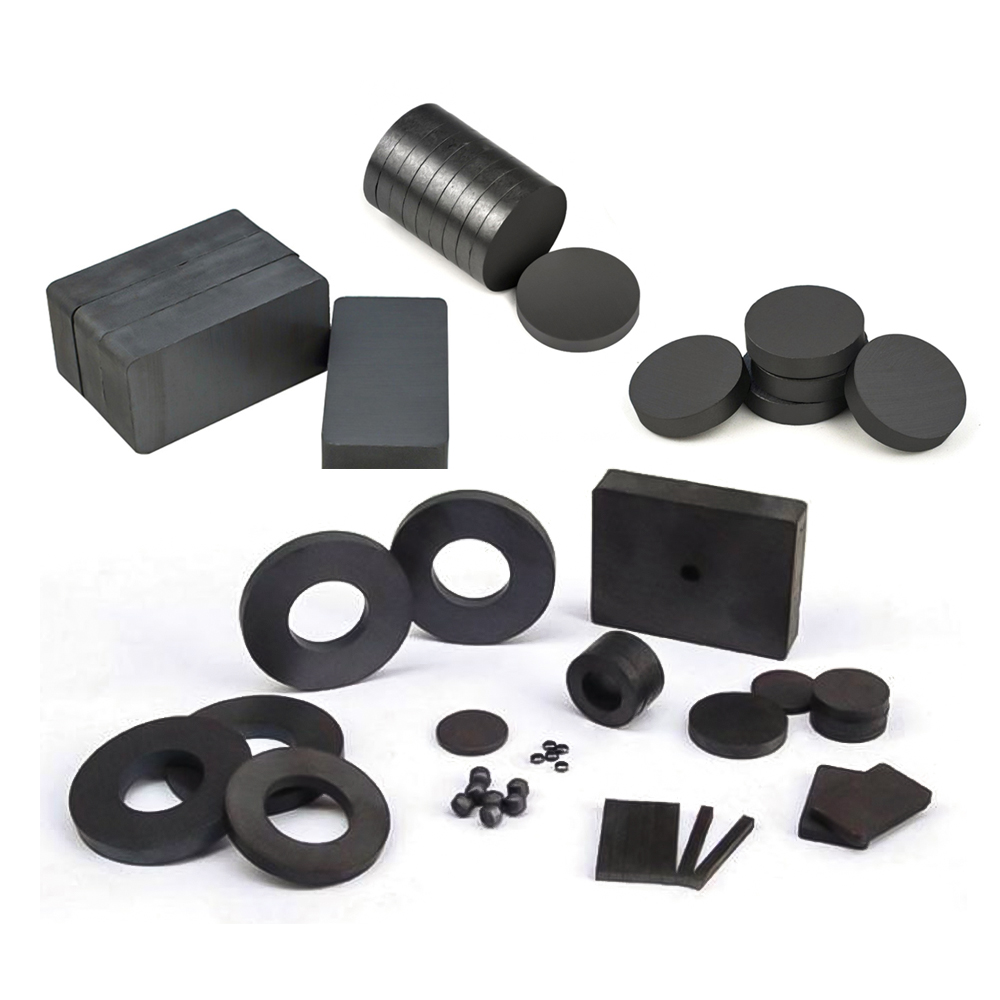
The global standard for cost-effective, medium-strength applications relies heavily on Ferrite Ceramic Magnets. Manufacturers create these vital components using strontium or barium ferrite. They deliver highly consistent magnetic fields across incredibly harsh physical conditions. You will find them deployed globally across thousands of industries.
While rare-earth alternatives provide superior holding strength, ferrite options remain the optimal choice for high-volume production lines. In this comprehensive guide, you will explore their core advantages and operational limitations. We will show you exactly when to specify them to maximize your project's success. You will also learn how to navigate common implementation risks smoothly.
Ferrite magnets offer the lowest cost-to-performance ratio for large-scale manufacturing.
They require no protective coating due to inherent, high-level corrosion resistance.
Ideal operating environments include high temperatures (up to 250°C) and moisture-heavy conditions.
Primary limitation: Lower magnetic energy (MGOe), requiring larger volume/footprint to achieve the same pull force as neodymium.
Brittleness means post-production machining is highly restricted; design must be finalized before pressing.
Engineers often fall into a predictable design trap. They over-specify rare-earth materials for relatively simple tasks. This simple mistake causes unnecessary budget bloat. Alternatively, they might under-specify a material's thermal limits. This miscalculation leads directly to product failure in the field. Identifying exact application boundaries becomes critical for your project timeline.
Defining success means knowing precisely when to rely on Ferrite Magnets. You should specify this material when certain project conditions align perfectly. Evaluating your operational environment early prevents costly redesigns later.
Consider these primary success criteria before finalizing your specifications:
Your mechanical assembly has ample physical space to accommodate a larger overall footprint.
Strict unit budget constraints define the broader project scope.
The component faces direct exposure to outdoor elements, high humidity, or wet environments.
Your application does not require extreme miniaturization.
We must also clarify industry terminology. Engineers divide ferrite materials into two distinct categories: hard and soft. This guide focuses entirely on hard ferrite. We use these permanent magnets for physical pull applications and industrial motors. They retain their internal magnetic fields permanently. Conversely, manufacturers use soft ferrites for transformers and electromagnetics. Soft variants do not hold a permanent magnetic charge. Knowing this difference prevents immediate sourcing errors.
Selecting the right material requires an objective look at both strengths and weaknesses. You must weigh environmental resilience against physical constraints. Ferrite Ceramic Magnets present a unique profile. They excel in specific areas where other alloys fail completely.
We base these advantages on proven material science and decades of industrial application.
Corrosion Resistance: These components simply do not rust. Manufacturers create them from an iron oxide ceramic compound. Because they are already oxidized during production, further oxidation becomes impossible. You eliminate the need for costly protective platings or coatings. This inherent resistance makes them perfect for marine or outdoor use.
Temperature Stability: Thermal degradation destroys many permanent magnets. However, ferrite variants handle extreme heat beautifully. They operate effectively up to 250°C (482°F). You will not experience irreversible demagnetization below this threshold. This stability guarantees consistent performance inside hot engine bays or industrial furnaces.
Cost Predictability: Raw material availability drives pricing stability. These components rely on abundant elements like iron oxide. They completely avoid the extreme price volatility of global rare-earth markets. Your procurement team can forecast budgets accurately over multi-year production runs.
Building trust requires acknowledging material limitations openly. You must design around these specific constraints.
Low Energy Product: These materials possess a lower Maximum Energy Product. Values typically range between 1 to 5 MGOe. You must use a larger physical mass to achieve strong magnetic fields. If you need massive pull force in a tiny space, this material will underperform.
Mechanical Fragility: You must respect their ceramic nature. They are incredibly brittle. They easily prone to chipping upon high-impact collisions. You cannot use them to bear structural loads inside your assembly. Dropping them onto hard surfaces will cause them to shatter instantly.
Buyers frequently struggle to choose between ferrite and neodymium. We can simplify this choice through a direct evaluation framework. You need to compare them across key bottom-of-funnel dimensions. This comparison reveals exactly where each material shines.
Below is a summary chart comparing both materials directly.
Evaluation Dimension | Ferrite Ceramic | Neodymium (Rare-Earth) | Winner |
|---|---|---|---|
Magnetic Strength (Pull Force) | Low to Medium (~1 to 5 MGOe) | Exceptionally High (up to 52 MGOe) | Neodymium |
Cost per Unit | Very Low (Highly abundant raw materials) | High (Subject to rare-earth market volatility) | Ferrite |
Environmental Tolerance | Excellent (No oxidation, highly heat resistant) | Poor (Requires nickel/epoxy plating to stop rust) | Ferrite |
Size Constraints | Bulky (Requires larger volume for strength) | Compact (Ideal for micro-electronics) | Neodymium |
You can clearly see how physical space and budget dictate the final choice. Neodymium wins on pure strength and compact sizing. However, Ferrite Magnets dominate regarding environmental survival and baseline affordability.
You can apply a simple "If/Then" logic framework to finalize your decision. Follow these numbered steps when evaluating your CAD designs:
If your assembly faces direct exposure to water, and physical space is not a strict constraint, then choose ferrite.
If you are designing microscopic sensors for consumer electronics, and budget allows, then choose neodymium.
If you need sustained operation near 200°C without complex cooling systems, then specify ferrite to avoid demagnetization.
If your product is a high-volume disposable consumer good, and margins are razor-thin, then ferrite is your only viable option.
The versatility of these components leads to massive adoption across diverse sectors. They quietly power thousands of everyday devices. Understanding these common applications helps you contextualize their true engineering value.
Automotive engineers rely heavily on these materials. You will find them inside power window motors, windshield wipers, and engine alternators. Industrial magnetic separators also use them extensively. These specific applications demand significant bulk and exceptional heat tolerance. The ceramic material handles under-hood temperatures flawlessly. It also keeps production costs low for vehicle manufacturers.
Fluid management systems present harsh operational environments. Water pump rotors and magnetic drive pumps frequently utilize these components. The engineers capitalize directly on the material's inherent lack of corrosion. Submerging these parts in liquid environments causes zero degradation. They spin endlessly inside HVAC water lines without ever rusting or contaminating the fluid.
Walk down any retail aisle to see these materials in action. Manufacturers use them for refrigerator magnets, household craft supplies, and Point of Purchase (POP) displays. Extreme pull force is entirely unnecessary here. Cost becomes the absolute primary driver. A bulky, inexpensive ceramic block serves these simple holding applications perfectly.
The global audio industry consumes millions of these units annually. They sit at the heart of most loudspeakers and dynamic microphones. Audio engineers prefer them due to their highly stable magnetic performance. They provide reliable acoustic translation over decades of use. Furthermore, their low unit price keeps consumer electronics affordable for the mass market.
Moving from design to physical production introduces new challenges. You must understand how this material behaves during manufacturing. Overlooking these realities will inflate your lead times rapidly. You must prepare your assembly lines accordingly.
Creating custom shapes requires custom die-pressing tools. Manufacturers press the raw powder into specific molds before sintering. This tooling process demands significant upfront capital. You should avoid jumping straight into custom shapes during early testing.
We advise buyers to use standard blocks, rings, or discs during the prototyping phase. Standardizing your early designs helps you avoid high initial tooling fees entirely. Once you validate the magnetic circuit physically, you can confidently invest in custom production dies.
You must finalize your geometric design before pressing occurs. You cannot conventionally mill, turn, or drill a ceramic part after it cures. The extreme brittleness makes standard machining impossible. Applying a standard drill bit will shatter the unit immediately.
Any necessary post-pressing modifications require specialized diamond-cutting tools. Operators must also use continuous water cooling during the cut. These heavy constraints drive up both lead times and unit costs significantly. Always aim to press the final net shape directly.
Your manufacturing assembly line introduces hidden dangers. Operators often handle multiple magnetized units simultaneously. Workers sometimes allow loose magnets to snap together across the workbench. This violent high-impact collision causes immediate shattering. You lose valuable components and risk worker safety from flying ceramic shrapnel.
Common Mistakes to Avoid: Do not store magnetized parts loosely in bulk bins. Do not allow untrained personnel to assemble high-strength arrays without protective fixtures.
Best Practices: You should mandate non-magnetic spacers during packaging. Train your assembly workers to handle pieces individually. Use specialized mechanical jigs to guide the components securely into their final housing.
Engineering teams succeed when they match the right material to the right environment. We have established that Ferrite Ceramic Magnets represent the ultimate utility option. They remain completely unmatched in cost-efficiency and environmental resilience. They will survive intense heat and corrosive moisture without failing. You only need to ensure your mechanical design accommodates their larger size and inherent brittleness.
Taking action requires a careful review of your current project parameters. Follow these next steps to move forward confidently:
Review your existing CAD models to confirm you have adequate volume allowance for a ceramic footprint.
Request detailed material specification sheets from your supplier to verify exact thermal thresholds.
Order standard-size sample kits to conduct physical pull testing before you commit to expensive custom tooling.
Update your assembly line protocols to include safe handling procedures for brittle ceramic components.
A: Only with specialized diamond-tipped tools and constant liquid coolant. You cannot use standard machine shop equipment. Attempting standard drilling, milling, or turning will instantly shatter the brittle ceramic material.
A: No. Under normal operating conditions, they lose only a fraction of a percent of their magnetism per century. They remain highly resistant to external demagnetizing fields, ensuring permanent performance over the lifespan of your product.
A: Isotropic variants can be magnetized in any direction but possess much weaker holding forces. Anisotropic variants are pressed directly inside a magnetic field. This restricts their final magnetization to a single direction but yields significantly higher magnetic strength.
A: Yes. Because they are a chemical ceramic compound made of iron oxide, they are already oxidized. They will never rust or corrode. This makes them ideal for outdoor and underwater environments without needing expensive protective coatings.


