We are constantly trying to improve ourselves in new thoughts, new technology and new working methods.

Views: 0 Author: Site Editor Publish Time: 2026-07-09 Origin: Site


Industrial spaces face an invisible but constant threat from scattered metal debris. Nails, screws, and sharp metal shavings often blend perfectly into gray shop floors or muddy construction dirt. Left unchecked, this rogue hardware causes severe tire punctures, compromises worker safety, and violates strict operational compliance protocols. You need a reliable, efficient method to capture this ferrous debris before it causes significant operational damage.
Enter the Magnetic Sweeper. We define this device as a specialized material-handling and safety tool engineered to lift hazardous metal pieces across expansive areas. This article explains exactly how these devices function on a mechanical level. We will explore the physics driving their pulling power and ground clearance capabilities. You will also learn a clear, commercial-grade evaluation framework to help you choose the right model. By understanding these mechanical dynamics, you can successfully protect your fleet, facility, and personnel from unnecessary physical risks.
Mechanism of Action: Magnetic sweepers utilize internal permanent magnets housed in non-magnetic casings, projecting a magnetic field downward to attract ferrous materials.
ROI & Compliance: Primary business drivers are mitigating tire repair costs, preventing workplace injuries, and maintaining strict Foreign Object Debris (FOD) compliance.
Form Follows Environment: Selection depends on surface area and terrain—ranging from manual push-types for tight shop floors to heavy-duty forklift or tow-behind models for scrap yards.
Critical Evaluation Metrics: Effective purchasing decisions hinge on pull strength at specific operating heights, housing durability, and the efficiency of the load-release mechanism.
At the heart of every effective sweeping device lies a precisely arranged magnetic circuit. Manufacturers typically utilize durable ceramic magnets or highly powerful neodymium permanent magnets. They arrange these internal components inside a specialized housing made of heavy-gauge aluminum or stainless steel. Why do engineers specifically choose non-magnetic metals for the shell? This deliberate design allows the internal magnetic field to project freely downward without getting absorbed or trapped inside the casing itself. An internal steel backing plate often sits above the magnets. It blocks upward flux and forces the attractive energy directly toward the ground.
Physics plays a crucial role in operational success. The inverse square law dictates how these tools behave in reality. Magnetic pull strength drops exponentially as you increase the clearance height. A magnetic block lifting fifty pounds of steel at a half-inch clearance might barely lift five pounds at a two-inch clearance. This physics reality explains why adjustable sweeping heights remain absolutely critical. You must lower the device enough to catch heavy bolts without constantly scraping the bottom over rough terrain.
Catching hazardous metal represents only half the job. You also need a safe, controlled way to release the payload. Modern commercial devices feature a smart mechanical quick-release mechanism. Internal magnet bars sit freely inside the housing rather than being fixed to the bottom. When you pull an external lever, internal hinges mechanically lift these internal bars upward and away from the bottom of the casing. This mechanical separation instantly breaks the external magnetic hold. The collected debris then drops safely into your designated scrap bin.
Industrial environments rely heavily on specialized sweeping protocols to control physical damage. In aviation, military bases, and high-end manufacturing facilities, Foreign Object Debris (FOD) control is strictly mandated. Stray hardware on an active runway or an aerospace assembly floor can easily cause catastrophic equipment failure. A commercial-grade sweeper removes these severe risks efficiently. It helps safety managers maintain strict FOD compliance protocols daily, ensuring audit readiness and operational safety.
Industrial scrap operations and metal recycling yards also benefit immensely. These high-volume sites handle thousands of tons of sharp fragments weekly. Frequent yard sweeping provides a dual benefit. First, it clears internal transit paths to maintain site safety for heavy loaders. Second, it directly helps recover sellable ferrous scrap. Workers simply sweep the incoming sorting yard and deposit the recovered steel fragments back into the active profit stream.
Finally, consider the vital aspect of fleet and asset protection. Trucking terminals, active construction sites, and large-scale roofing projects generate dangerous hardware runoff continuously. Uncollected roofing nails directly cause costly flat tires. Routine tire replacements, emergency patching labor, and unexpected vehicle downtime drain operational budgets quickly. Establishing routine facility sweeps protects your transport fleet, keeps transit vehicles moving on schedule, and eliminates entirely preventable tire trauma.
No single sweeping design fits every industrial environment perfectly. You must select a specific model based on your unique terrain, facility square footage, and debris volume. We categorize these devices into three distinct operational formats.
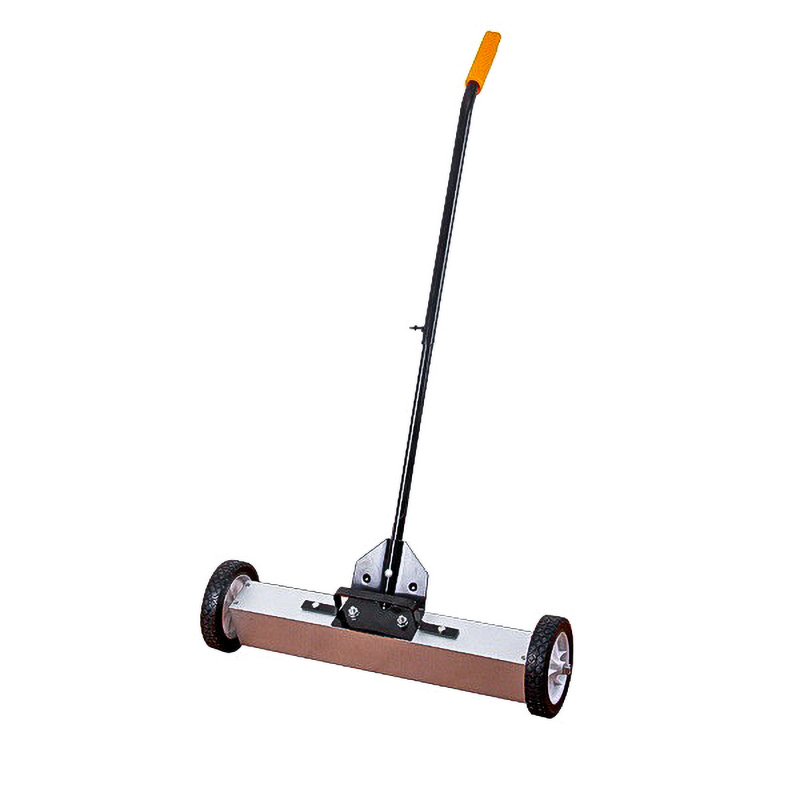
These compact units look very similar to heavy-duty lawnmowers. Operators push them manually across the target area. They range from 12 inches to 36 inches in width. They work best for tight manufacturing workshops, narrow factory aisles, and residential or light-commercial roofing jobs. Their highly compact nature allows you to navigate closely around heavy machinery and tight corners. However, they possess clear limitations. Using manual sweepers on large multi-acre lots proves highly inefficient. Their overall daily success depends heavily on operator stamina and walking speed.
When manual pushing becomes physically impractical, tow-behind models take over. You hook these larger units directly to a facility tractor, ATV, or utility vehicle. They shine brightly in unpaved dirt lots, sprawling construction sites, and long agricultural dirt roads. When evaluating tow-behind units, you must heavily scrutinize their recommended speed limits. You must actively govern your towing speed. Towing the unit too fast causes debris to skip under the magnetic field or aggressively detach upon bouncing over potholes.
Massive industrial transit hubs require automated, passive solutions. Forklift and vehicle-mounted models handle paved shipping yards, vast recycling centers, and daily warehouse maintenance. These heavy-duty units integrate directly onto your existing material handling equipment. They mount easily to forklift tines or the front steel bumpers of fleet trucks. This integration turns existing daily transit into a passive cleaning operation. The facility floor gets cleaned simply by warehouse workers driving their normal operational routes.
Chart: Magnetic Sweeper Category Comparison | |||
Category | Ideal Terrain | Typical Width | Primary Limitation |
|---|---|---|---|
Push-Type | Smooth concrete, tight shop aisles, paved walkways | 12" to 36" | Relies entirely on manual operator stamina |
Tow-Behind | Unpaved lots, gravel roads, large construction sites | 48" to 96" | Requires strict speed governance to prevent debris skipping |
Vehicle-Mounted | Large warehouses, shipping docks, massive recycling yards | 60" to 96" | Requires compatible mounting hardware and host vehicles |
Choosing a dependable commercial unit requires looking past basic marketing claims. You should thoroughly evaluate multiple physical dimensions before purchasing. Follow these specific criteria to shortlist a reliable Magnetic Sweeper for your facility.
We strongly warn against evaluating maximum pull strength in a complete vacuum. Manufacturers often test raw lift capacity directly against a perfectly flat steel plate. Real-world conditions look very different. A viable commercial unit must maintain a sufficient Gauss rating at a two-inch to four-inch ground clearance. If the projected field cannot reach the dirt floor from this specific height, it simply cannot collect hidden nails. Always demand pull-strength metrics measured at realistic clearance heights.
You must quickly differentiate between consumer-grade models and commercial-grade construction. The difference severely impacts longevity.
Consumer-Grade: This style often relies on thin stamped sheet metal. It remains highly prone to rust, denting, and severe bending upon impact.
Commercial-Grade: High-end units utilize heavy-gauge aluminum or industrial stainless steel. These non-magnetic protective metals endure daily impacts without degrading the sensitive internal magnetic circuit.
The ground environment dictates your required wheel choice. Pay incredibly close attention to tire construction. We highly recommend specifying flat-free tires for all heavy-duty applications. Look specifically for solid rubber or foam-filled wheel variants. Using standard pneumatic air tires in an area known for sharp debris invites constant, frustrating flats.
Carefully evaluate exactly how the operator will clear the unit. Compare manual pull-levers against automated or remote cable release systems. Factor in operator safety and overall workflow speed. Remote releases keep forklift drivers safely in their seats. This simple ergonomic feature significantly boosts daily operational efficiency and encourages more frequent debris dumping.
Even top-tier sweeping equipment demands proper operational awareness. Users often misunderstand daily maintenance needs and physical limitations. Let us explore the most common implementation risks and exactly how to navigate them.
The "Demagnetization" Myth vs. Reality: Many cautious buyers worry about their investment losing power over time. We must clarify this pervasive myth immediately. Commercial permanent magnets rarely lose strength under normal operational conditions. They will not spontaneously fade away over five years. Degradation only occurs if the device experiences extreme heat exposure beyond curie temperatures or suffers massive physical trauma.
Overloading Risks: A major operational hazard involves severe debris overloading. You cannot let unlimited metal accumulate on the bottom surface. Excess metal acts as a physical barrier. It heavily dampens the magnetic field trying to reach new ground targets. This overloading causes a dangerous "wipe-off" effect. The device will drag across a tall speed bump and forcibly scrape the collected debris right back onto the ground. You must establish regular, mandated drop-off intervals to prevent this failure.
Environmental Hazards: Standard sweepers face aggressive risks in wet or corrosive environments. Avoid using unsealed units in heavy rain, salt-heavy winter roads, or active chemical plants. Moisture easily penetrates poorly sealed casing joints. This water intrusion quickly rusts internal hinge mechanisms and seizes release levers. Always specify properly sealed, stainless-steel housings if you operate in harsh, wet weather conditions.
A high-quality magnetic sweeper functions as much more than just a basic cleaning tool. It serves as a highly active risk-management asset for your industrial facility. By efficiently capturing dangerous ferrous materials early, you actively safeguard your operational team and your expensive transit fleet. Keep these final action-oriented steps in mind as you move forward:
Match your final model selection directly to your precise terrain type and typical daily debris volume.
Prioritize realistic operational clearance heights over misleading maximum lift capacity marketing numbers.
Always choose durable, flat-free wheels and heavy-gauge protective housings for long-term reliability.
Assess your facility's total square footage today. Identify the primary metal debris causing the most issues on your site. Use these specific operational insights to begin shortlisting the absolute best push, tow, or vehicle-mounted model for your unique environment.
A: No. Magnetic sweepers only attract ferrous metals containing iron or steel. Non-ferrous materials, such as aluminum, brass, copper, and titanium, lack magnetic properties. To properly manage non-ferrous debris, facilities must utilize traditional mechanical brooms, vacuum sweeping trucks, or manual cleanup protocols.
A: You should usually drive between 3 to 5 mph. Speed governance is absolutely critical. Exceeding recommended sweeping speeds heavily reduces the time the magnetic field has to grab the ground debris. Moving too fast causes the device to bounce, wiping already-collected metal back onto the road.
A: While possible, DIY builds almost always lack commercial durability. They typically feature weak external housings, highly unreliable quick-release mechanisms, and wildly inconsistent ground clearance. You will likely spend more money fixing unprevented tire punctures than you save by building a homemade unit.
A: Most industrial sweepers use internal permanent magnets and require absolutely no external power source. They operate as completely passive tools. Electromagnets, which do require significant electrical power and heavy cables, are typically reserved exclusively for massive, specialized heavy-industry applications like giant steel mills.


