We are constantly trying to improve ourselves in new thoughts, new technology and new working methods.

Views: 0 Author: Site Editor Publish Time: 2026-07-12 Origin: Site


Stray metal debris poses severe operational risks in active workspaces. A single rogue nail can easily cause flat tires on heavy machinery or result in severe personnel puncture injuries. Ignoring these hazards invites costly downtime and potential safety compliance issues. Sweeping shop floors manually is notoriously inefficient. Standard brooms often leave embedded fasteners behind or merely push them into deeper crevices. Upgrading to a dedicated Magnetic Sweeper turns a prolonged hazard into a swift, five-minute cleanup task. You eliminate physical strain while drastically improving floor safety immediately. This guide provides a straightforward framework for evaluating, comparing, and selecting the right equipment. We will explore how to match your specific terrain, debris volume, and facility size to the optimal sweeping solution.
Clearance Over Strength: A magnet's raw lifting capacity means nothing if the sweeper's ground clearance isn't calibrated for your terrain (e.g., gravel vs. smooth concrete).
Release Mechanisms Are Mandatory for High Volume: Manual debris removal is dangerous and slow; quick-release load-drop levers are essential for commercial use.
Match Size to Aisle Width: A 36-inch sweeper clears open lots faster but is useless in cramped woodworking shops or tight warehouse aisles where a 17-inch to 24-inch floor magnetic sweeper excels.
Wheel Type Dictates Lifespan: Hard plastic wheels shatter on rough construction sites; pneumatic or solid rubber tires are required for heavy-duty applications.
Treating debris removal as a casual chore is a costly mistake. You must frame the purchase of dedicated sweeping equipment as a proactive cost-prevention measure. Consider the replacement cost of heavy-duty tires. Skid steers, forklifts, and utility vehicles run on expensive commercial rubber. A single hidden bolt can destroy a tire instantly. Punctures halt operations and delay project timelines. Furthermore, personnel safety relies on clean walking surfaces. Workers stepping on rusted nails face serious puncture wounds. These injuries lead to workers' compensation claims, medical expenses, and lost labor days. Proper hazard extraction mitigates these expensive risks immediately.
Visual inspection wastes valuable man-hours. You pay workers to build, repair, or transport goods. You do not pay them to hunt for dropped screws. Manual sweeping requires immense effort and rarely captures everything. Employees pushing standard brooms merely move metal fragments from one side of the room to another. Compare this outdated method to a single pass using commercial-grade equipment. One employee can clear an entire warehouse floor in minutes. They capture unseen hazards efficiently. The return on investment becomes obvious when you calculate the labor hours saved each week.
Regulatory bodies demand safe working environments. The OSHA General Duty Clause requires employers to furnish a workplace free from recognized hazards. Scattered sheet metal screws and framing nails clearly violate this standard. Implementing a daily magnetic cleanup routine provides a verifiable method of hazard removal. You create a documented process protecting your workforce. Safety inspectors look favorably upon facilities demonstrating proactive hazard management. You build a stronger safety culture when employees see management investing in the right protective tools.
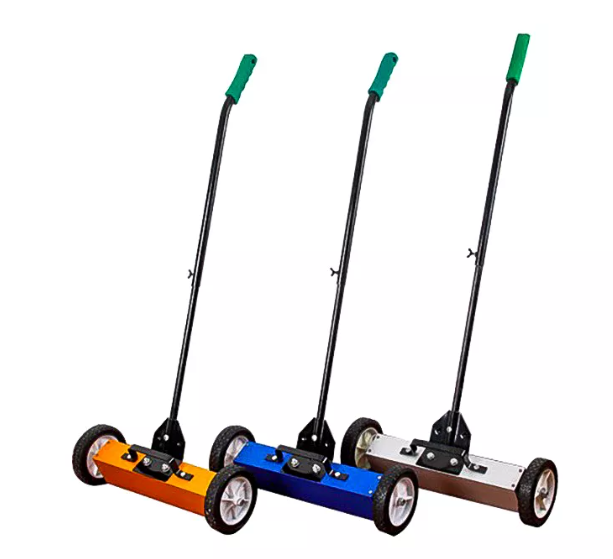
Selecting the correct model requires understanding your specific workspace. Manufacturers design different styles for vastly different environments. A reliable Floor Magnetic Sweeper serves as the backbone of daily safety operations, but other models fill niche roles.
This category represents the most popular choice for indoor and light outdoor use. You simply walk behind the unit and push it like a lawnmower.
Best for: Workshops, automotive garages, retail warehouse floors, and standard residential driveways.
Key trait: High maneuverability and user-friendly operation. They easily navigate around workbenches. Widths typically range from 14 to 36 inches.
Industrial scale requires industrial power. You attach these massive units to vehicles to cover acres of ground quickly.
Best for: Large construction sites, expansive scrap yards, and massive distribution center lots.
Key trait: They feature high-gauss magnets capable of pulling heavy scrap metal at vehicle speeds. They require heavy-duty suspension systems to handle uneven terrain.
Sometimes you need precise, targeted extraction rather than broad area coverage.
Best for: Roofing tear-offs, reaching deep into tall grass, or precise cleanup inside tight engine bays.
Key trait: They are extremely lightweight and highly targeted. They sacrifice overall capacity for precision access.
Sweeper Type | Primary Environment | Maneuverability | Volume Capacity |
|---|---|---|---|
Push-Type (Rolling) | Garages, Shops, Driveways | High | Medium |
Tow-Behind / Forklift | Scrap Yards, Open Lots | Low | Extremely High |
Handheld / Wand | Roofs, Grass, Engine Bays | Very High | Low |
Many buyers fall for inflated marketing numbers. Manufacturers often advertise raw "lift capacity" like 50 pounds. They test this metric under perfect laboratory conditions using a solid block of steel. Real job sites do not work this way. You must evaluate the effective sweeping height instead. Ask yourself how far above the ground the unit can successfully pull a 3-inch nail. A magnet might lift 50 pounds when touching steel directly. However, it might fail to pick up a single dropped screw from two inches away. Commercial-grade tools feature concentrated magnetic fields extending downward. They lift debris effortlessly out of cracks and grooves.
Clearing collected metal manually is dangerous. Sharp steel shavings easily slice through cheap gloves. You must prioritize quick-release systems. Commercial units feature a top-mounted lever. You simply pull the handle, disengaging the magnetic field. The entire payload drops cleanly into your recycling bin. Contrast this with fixed-magnet systems. Cheap consumer models require you to physically wipe the hazard away. This outdated design increases your injury risk significantly. It also slows down the cleanup process drastically.
Terrain determines your wheel requirements. You cannot push tiny plastic wheels through mud. Adjustable wheel height is an absolute necessity. You need low clearance to capture fine metal dust on smooth shop floors. Conversely, you need high clearance to traverse uneven job sites without snagging. Tread selection matters equally. Choose smooth rubber wheels for indoor use to protect epoxy coatings. Select deep-tread pneumatic tires for outdoor environments containing mud, tall grass, and loose gravel.
Your equipment will take a beating. Housing material dictates the overall lifespan of the tool. Aluminum frames offer excellent rust resistance. They perform brilliantly in wet climates or coastal environments. They remain lightweight and easy to push. Heavy-duty steel housing provides superior impact resistance. Steel survives aggressive construction sites where workers toss tools carelessly into trucks. Evaluate your primary working environment carefully before selecting the housing material.
Woodworking shops present a highly frustrating cleanup scenario. Magnets easily detect hidden screws. However, thick layers of sawdust insulate the metal. Wood shavings jam the wheels instantly. They create a physical barrier preventing the magnetic field from reaching the floor. You must alter your approach to succeed here.
Pre-sweep bulk non-ferrous debris using a standard push broom.
Raise your sweeper clearance slightly to glide over remaining sawdust piles.
Empty the collection tray frequently before debris clusters cause drag.
Following these steps ensures you capture hidden fasteners without constantly clearing jammed wheels.
Do not underestimate the physical effort required outdoors. Rolling a massive 36-inch unit across smooth concrete feels effortless. Pushing that same unit through thick, tall grass requires serious exertion. Friction increases exponentially on rough terrain. If your primary surface involves dense vegetation, reconsider your sizing. A narrower unit requires far less pushing force. You will complete the task faster without exhausting yourself.
Every tool has a maximum capacity limit. You must understand what happens when you reach it. As metal accumulates on the bottom, it creates a clumping effect. New debris cannot reach the active magnetic field. The collected mass begins dragging across the floor. This dragging action physically knocks previously captured nails back onto the ground. You end up making the floor more hazardous. Frame your operational routine around frequent drops. Empty the payload long before it reaches maximum capacity.
Avoid any manufacturer claiming 100% pickup success on the very first pass. Real workspaces contain highly varied surfaces. Heavily contaminated gravel driveways hide nails in deep crevices. Muddy lots trap heavy bolts stubbornly. You must set realistic expectations. Heavily contaminated areas require a structured cross-hatch sweeping pattern. First, walk the area north to south. Next, sweep the exact same area east to west. This two-pass method guarantees maximum extraction. It pulls stubborn fasteners out from multiple angles.
Tight corners define your workspace. Massive tools only cause frustration here. You need agility to navigate around band saws and assembly tables. Prioritize a 17-inch to 24-inch push-type model. Ensure it features a quick-release handle for safety. Select smooth rolling rubber wheels to glide easily over hard shop floors.
Your environment changes daily. You work in mud, over lawns, and across unfinished driveways. Durability and terrain navigation matter most. Prioritize all-terrain pneumatic wheels. Select a 24-inch to 36-inch sweep width to cover open yards efficiently. Insist on a rugged aluminum body for reliable all-weather durability and rust prevention.
Human power cannot scale to your needs. Pushing a tool across three acres wastes money. Bypass push models entirely. Shortlist tow-behind or forklift-mounted units immediately. Ensure they feature permanent heavy-duty ceramic or neodymium magnets. These setups handle high-speed transit and massive scrap volume.
Stop guessing and start measuring. Audit your primary sweeping surface today. Determine if you mostly face smooth concrete or rough gravel. Next, measure your narrowest operational chokepoint. Check the distance between your workbenches or warehouse racks. Use this measurement to determine your absolute maximum sweeper width. Complete this simple audit before you browse any product catalogs.
A high-quality magnetic sweeper represents a direct investment in facility safety and equipment preservation. It is not just another basic cleaning tool. You protect expensive machinery tires and prevent devastating personnel injuries simultaneously. The decision process does not need to be complicated. Base your final choice on three strict factors. First, match the wheel type and clearance to your primary terrain. Second, select a quick-release mechanism to handle your daily debris volume safely. Finally, match the sweeping width to your specific workspace size and aisle dimensions. Following this logic ensures you purchase the exact tool required for your environment.
A: No. Magnetic tools only attract ferrous metals containing iron. They easily collect steel nails, screws, and iron shavings. Non-ferrous metals like aluminum, brass, and copper do not react to magnetic fields. You must use traditional sweeping methods to clean up non-ferrous debris.
A: Yes, they work exceptionally well outdoors. However, success requires two specific features. You need adjustable wheel heights to prevent the unit from snagging on uneven ground. You also need a stronger pull force to physically lift heavy debris out of deep crevices and tall grass.
A: Permanent ceramic or neodymium magnets retain their strength for decades under normal conditions. They do not require a power source. However, exposure to extreme heat or severe physical impacts can degrade the magnetic field. Proper storage ensures lifelong reliability.
A: Cleaning a fixed-magnet unit requires strict safety protocols. Never use your bare hands. Wear heavy leather work gloves to prevent lacerations. Take a thick shop rag, grip the accumulated debris firmly, and slide it off the end of the magnet directly into a waste bin.


