We are constantly trying to improve ourselves in new thoughts, new technology and new working methods.

Views: 0 Author: Site Editor Publish Time: 2026-04-27 Origin: Site


Have you ever stared at a solid magnetic block and wondered how to attach it to a surface? It is a common dilemma for DIY enthusiasts and engineers alike. You might assume you can grab standard hardware and bore a hole right through the center. The reality is far more complicated. While technically possible, drilling a magnetized ferrite magnet is highly inefficient. It carries severe physical risks. Industry professionals generally discourage doing this outside of specialized facilities.
Trying to modify these brittle components yourself often ends in shattered pieces. You will likely ruin your tools and experience immense frustration. Why does this happen? The material behaves much more like hard glass than structural steel. This guide evaluates the real physical risks of DIY modification. We provide the exact methodology for those who must try. Finally, we explore more reliable commercial alternatives to secure your projects and save you time.
Material Reality: Ferrite ceramic magnets share physical properties with glass; standard drill bits will shatter them instantly.
Time & Cost Inefficiency: DIY drilling requires specialized diamond bits, extreme patience (often 6+ hours for a small hole), and constant water cooling.
Industrial Standard: Commercial magnets are drilled before the magnetization process using multi-wire cutting technology.
Better Solutions: Sourcing pre-drilled magnets (countersunk/pot magnets) or utilizing structural adhesives are the most viable paths for project success.
Before you clamp your component onto a drill press, you must evaluate the physical and financial risks. The decision to modify a finished part often costs more in ruined materials than the final result is worth. Let us examine the core reasons why this process frequently fails.
You must understand how manufacturers create these components. They rely on powder metallurgy. Workers press finely milled chemical powders into a mold. They then sinter these molds in high-temperature kilns. This process fuses the particles together. It creates a solid but highly brittle structure.
Because of this sintering process, the material lacks tensile strength. It cannot absorb mechanical stress. Standard high-speed steel (HSS) or carbide drill bits are designed to cut metal. They dig in and peel material away. When you use these tools on sintered ceramics, the bit catches the edge. This immediate shock causes severe chipping. It leads to surface flaking. In most cases, it triggers catastrophic cracking across the entire block.
Friction generates intense heat. Drilling hard ceramics creates an extreme amount of friction. As the bit spins against the hard surface, local temperatures spike rapidly. This heat poses a massive threat to magnetic performance.
Magnets rely on perfectly aligned atomic domains. When you introduce excessive heat, you give these atoms kinetic energy. They begin to vibrate and break their alignment. Every magnetic material has a maximum operating temperature. If the localized heat at the drill site exceeds this threshold, the material suffers irreversible thermal demagnetization. You might successfully drill the hole, but you will be left with a useless piece of ceramic.
Grinding away material creates fine dust. In this scenario, you are creating highly abrasive, magnetized dust. This presents a nightmare for your workspace and your tools.
The magnetic swarf actively clings to the drill bit. It travels up the flutes and packs itself tightly. It clings to the chuck and finds its way into the drill motor. Because the dust is essentially crushed ceramic powder, it acts like coarse sandpaper. It rapidly destroys bearings and internal motor components. Note: Neodymium dust is highly combustible and flammable. Ferrite dust will not catch fire, but its abrasive nature makes it incredibly destructive to machinery.
If drilling is so difficult, how do manufacturers supply millions of pre-drilled parts every year? Establishing credible expectations requires looking at industrial standards. Commercial factories achieve perfect holes through completely different methods.
Commercial manufacturers never machine a finished, magnetized block. They perform all drilling, cutting, and shaping operations on the raw material first. They do this before exposing the material to the magnetizing coil.
Working with an unmagnetized block entirely eliminates the magnetic dust adherence problem. The abrasive swarf no longer sticks to the tooling. The continuous flow of coolant easily washes the ceramic dust away into filtration systems. This simple change in workflow separates industrial success from DIY failure.
Factories do not use standard twist drills. They utilize specialized equipment designed specifically for ceramics. They deploy multi-wire cutting technology. This involves massive arrays of highly tensioned tungsten or diamond-coated wire. These wires slice through the raw blocks using abrasive slurries.
For holes, they use continuous-coolant diamond core drills. These hollow bits grind the material rather than cutting it. They run under high-pressure water jets to ensure the temperature never rises above ambient levels.
Even at the highest industrial level, certain structural limitations remain absolute. It is physically impossible to tap threads into Ferrite Ceramic Magnets. The material is simply too brittle to hold a fine thread pitch. The threads would instantly crumble under the clamping force of a screw.
All mounting solutions must rely on straight-through clearance holes. You can use countersunk profiles for flat-head screws. However, you must always pass a bolt through the hole and secure it into a different substrate.
Sometimes engineers or prototypers find themselves in a bind. They have no other choice but to modify an existing piece. If you must attempt this task, you need a rigorous, verifiable framework. Follow these exact steps to minimize your risk of failure.
Your standard garage tools will not work. You must gather highly specific equipment before you begin.
Drill Bits: You must exclusively use diamond-coated burrs or specific glass/tile core bits. Standard masonry bits are too blunt and will cause micro-fractures.
Fixturing: Never use a bare steel vice. You must use non-magnetic clamps made of aluminum, brass, plastic, or wood.
Padding: Pad your clamping surfaces with thick cloth or dense rubber. This prevents the vice jaws from crushing the brittle edges as you tighten them.
Safety Gear: Wear sealed safety goggles and a high-filtration dust mask. The abrasive dust is dangerous to inhale.
Patience is your primary tool. You cannot rush a ceramic grind.
Speeds & Feeds: Set your drill press to maintain absolute minimum RPMs. Target 300 to 500 RPM. Never exceed this limit. Apply only feather-light downward pressure.
Coolant: Constant flood cooling is non-negotiable. You must use a continuous stream of water or specialized cutting oil. This prevents thermal demagnetization and flushes debris.
Pilot to Final: Start small. Use a 1-2mm diamond burr to establish a pilot hole. Once through, switch to a larger bit. Progressively expand the hole using 2-3mm increments.
Time Expectation: Adjust your timeline. Drilling a basic 1/4-inch hole through a thick block can take hours of micro-progress. Expect a 6-hour project for even simple modifications.
To summarize the operational constraints, review the parameters chart below.
Drilling Parameters Chart
Parameter | Required Setting | Reasoning |
|---|---|---|
Spindle Speed | 300 - 500 RPM | Prevents overheating and burning the diamond grit. |
Downward Pressure | Light / Feather-touch | Avoids catastrophic cracking and chipping. |
Coolant Supply | Continuous flood (Water) | Prevents thermal demagnetization; clears abrasive dust. |
Bit Type | Diamond Core / Burr | Grinds the material rather than cutting or biting it. |
Common Mistakes to Avoid
A frequent error DIYers make is pressing too hard as the bit is about to break through the bottom surface. This "blow out" shatters the back face. Always place a sacrificial piece of wood firmly against the bottom of the magnet to support the exit hole.
Once you breach the material, your job is not finished. You must clean the area meticulously.
Use compressed air to blow out the internal bore. Alternatively, use a high-powered vacuum. You must remove all magnetic swarf before it interferes with the operating magnetic field. Finally, the drilling process removes any factory-applied surface treatments inside the hole. Apply a light coat of rust-preventative oil to the exposed inner bore to protect the raw material from oxidation.
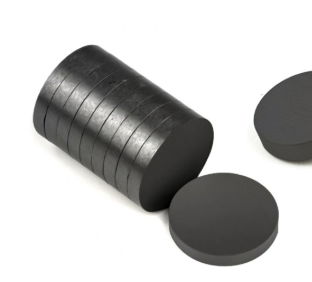
Given the extreme frustration and high failure rates of DIY modification, we highly recommend pivoting your strategy. You can achieve excellent mounting results without ever turning on a drill press. Structural adhesives offer a highly reliable and commercially viable fixing method.
Modern chemistry provides bonding agents that often exceed the tensile strength of the ceramic itself. You just need to select the right compound for your environment.
Two-Part Epoxy: This is the gold standard for rigid, high-strength bonds. It is perfect for attaching metal plates directly to the magnetic face. It cures into a rock-solid plastic matrix.
Structural Silicone: Products like GE Silicone II are ideal for wet environments. They are frequently used in shower door repairs. Silicone also provides slight flexibility. This flex helps absorb mechanical impacts that might otherwise shatter the brittle ceramic.
Construction Adhesives: Formulas like Liquid Nails work exceptionally well for mounting components to porous surfaces. They are your best choice for attaching blocks to wood frames or drywall.
The strongest epoxy in the world will fail if the surface is dirty. Factories often coat their products in light oils to prevent oxidation during shipping. You must remove this barrier.
Scrub the mounting face thoroughly with 90% isopropyl alcohol. Wipe it completely dry with a lint-free cloth. Lightly scuffing the surface with fine sandpaper can also give the adhesive a better mechanical grip. Once prepared, apply the glue and clamp the pieces firmly until the full cure time elapses.
If adhesives do not suit your mechanical design, you should alter your procurement strategy. Buying the correct part from the start is the ultimate time-saving decision. Standardizing your designs around off-the-shelf solutions eliminates production bottlenecks entirely.
Manufacturers offer widely available countersunk components. Factories machine these parts with a precisely tapered hole. This geometry allows standard flat-head screws to sit perfectly flush with the active surface.
Using a countersunk profile ensures nothing protrudes to scratch your mating surfaces. You get a clean, professional finish. You bypass all the labor and risk associated with custom fabrication.
For heavy-duty applications, pot magnets are the superior choice. A pot magnet consists of a standard ceramic disc permanently encased inside a custom steel cup.
This design offers two massive benefits. First, the steel cup provides a highly secure, durable mounting point. The cup itself is often pre-drilled or pre-tapped with standard machine threads. You simply bolt it into place. Second, the steel casing redirects the magnetic flux lines. It forces the entire magnetic field to focus solely on one open face. This clever engineering trick dramatically increases the holding power compared to a bare block of the same size.
Weigh the cost of a ruined diamond drill bit against the price of a ready-made pot magnet. The pre-drilled commercial option wins every single time.
Comparison Chart: DIY Drilling vs. Commercial Sourcing
Factor | DIY Drilling Attempt | Sourcing Pre-Drilled |
|---|---|---|
Time Required | Hours per hole | Zero (Ready to install) |
Failure Risk | Very High (Shattering) | None |
Tooling Cost | High (Diamond bits, coolant) | None (Standard screws) |
Magnetic Strength | Risk of thermal loss | Optimized factory specs |
Attempting to drill a solid block of magnetized material yourself is an exercise in frustration. The brittle nature of the ceramic matrix guarantees a high failure rate. You risk destroying expensive tools. You risk inhaling abrasive dust. Above all, you risk ruining the magnetic performance through localized friction heat.
We strongly recommend abandoning the DIY drilling approach. Pivot your project toward modern structural adhesives for a seamless, no-drill bond. If your design strictly requires mechanical fasteners, standardize your workflow around factory-made countersunk and pot assemblies. They are safer, faster, and infinitely more reliable.
Do not waste your weekend fighting industrial ceramics. Protect your tools and browse catalogs for pre-drilled mounting solutions that fit your precise engineering needs today.
A: No. The blade will instantly dull, and the magnet will shatter. Only diamond-edged wet saws can cleanly cut ferrite.
A: Yes, if the heat from friction exceeds the material's maximum operating temperature, or if the volume reduction significantly alters the magnetic circuit.
A: While slightly better than HSS, standard masonry bits are too blunt and will cause micro-fractures. Diamond-coated bits are the only reliable option.


